
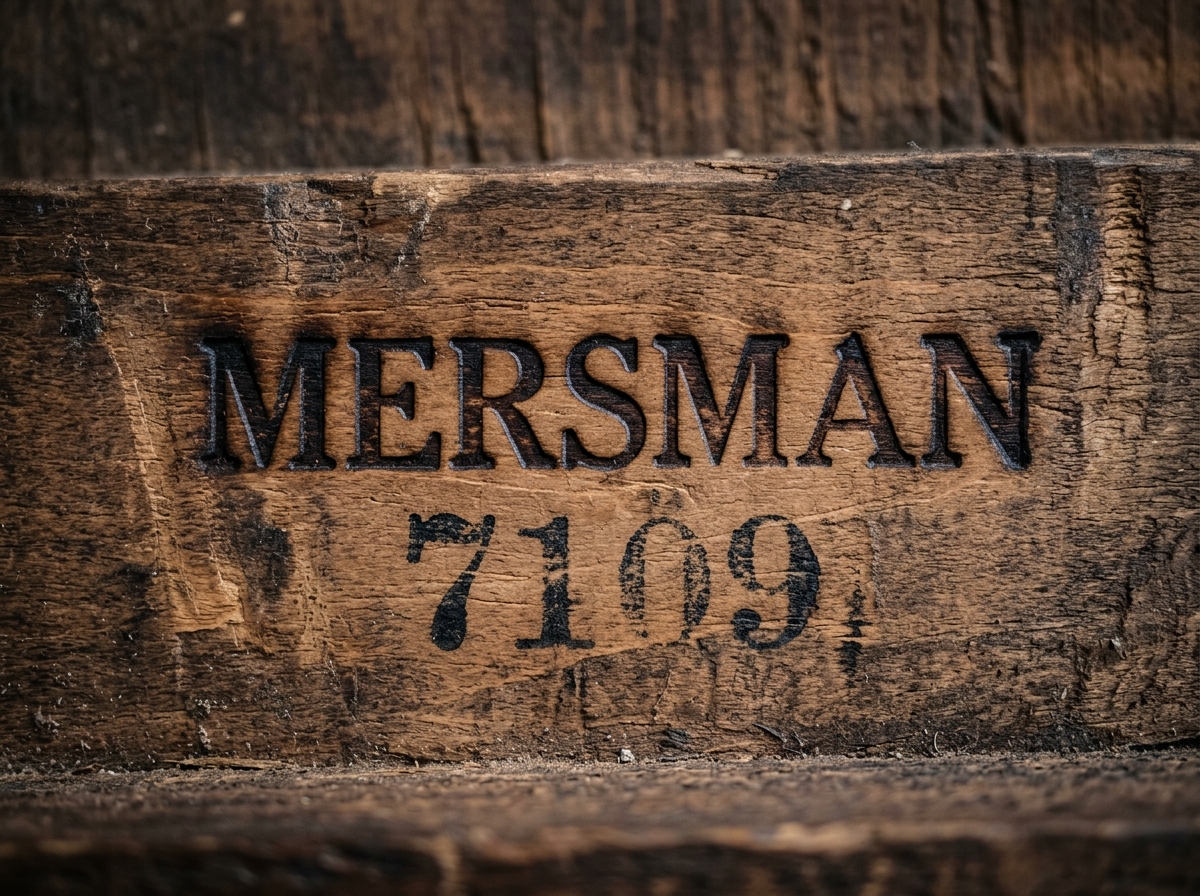
To identify a Mersman table, inspect the raw wood underside for a heat-stamped “MERSMAN” mark and a 4-digit model number. Founded in Celina, Ohio, the Mersman Brothers company produced over 30 million living room tables between 1876 and 1995. The stamped 4-digit number is an internal catalog design code (not a manufacturing year). Most vintage Mersman tables sell between $25 and $150 at estate sales, while iconic pieces like the Model 7109 Lyre table reach $175–$250, and rare Lou Hodges mid-century bentwood glass tables command $350–$650.
Key Mersman Table Identification Takeaways
- Where to Look: Markings are located exclusively on the underside of the table top, under the apron rail, or stamped inside the drawer cavity.
- The 4-Digit Mystery: Numbers like 7109, 6632, or 8104 designate the specific furniture style pattern, not the production date.
- Solid vs. Veneer: Approximately 90% of Mersman tables feature a solid hardwood substrate (often yellow poplar or gumwood) veneered with mahogany, walnut, or oak to prevent warping.
- Market Realism: Because Mersman produced millions of units, they are cherished mid-century utilitarian antiques rather than ultra-rare museum rarities.
- Hardware Clues: Original 1930s–1950s Mersman tables use slotted machine screws; post-1960 models transition to Phillips-head screws and metal bracket braces.
The Mersman Factory History: Four Decades of American Craftsmanship
Between 1920 and 1970, an estimated one out of every ten tables sold in the United States was produced by the Mersman Brothers Corporation. Operating from a massive factory complex in Celina, Mercer County, Ohio, Mersman mastered conveyor-belt precision woodworking long before most competitors.
Understanding the company’s timeline is the first step in pinpointing the production era of your table:
- 1876–1900 (Mersman, Shenck & Co.): J.B. Mersman founded the firm making beds and solid wood parlor tables. Pieces from this Victorian era often feature Eastlake styling, carved walnut, and pin-and-cove Knapp drawer joinery.
- 1900–1927 (Mersman Bros. Brandts Co.): The company consolidated under J.B.’s sons (Edward, Walter, and Albert) and specialized heavily in dining tables and library tables. Paper labels with ornate typography were common.
- 1927–1977 (The Golden Era: Mersman Brothers Corp.): Adopted the legendary advertising slogan “The Table Behind the Nation’s Best Living Rooms.” This era generated the famous mahogany harp tables, tiered step end tables, coffee tables, and Queen Anne drop-leaf tables that populate American homes today.
- 1977–1995 (Mersman Tables / Congoleum Corp.): Acquired by Congoleum in 1977, the company transitioned to brass foil tags and modern laminate/particleboard production before permanently closing its doors in 1995.
Deciphering Mersman Markings: Brand Stamps vs. Stenciled Numbers
When you flip an antique table over, Mersman markings appear in one of three primary formats depending on the era:
1. The Heat-Branded Wood Mark (1930s–1960s)
The most common authentic mark is a dark, recessed brand burned directly into the raw wood on the underside of the table top or inner apron. The brand reads “MERSMAN” in clean all-caps serif lettering, often contained within a subtle oval or triangle border. Because this mark is burned into the grain, it cannot peel or fade like a paper label.
2. The Stamped 4-Digit Model Number
Directly below or beside the branded company name, you will almost always find a stamped set of numbers in dark black or purple-black factory ink. The most frequently asked question by antique owners is: “Does 7109 mean it was made in 1971?”
The answer is no. Mersman used 4-digit codes strictly as internal catalog design pattern numbers:
- Design Identification: The number indicated the specific template, leg turning, and top shape for factory assemblers.
- Finishing Batch Codes: Sometimes a dash and additional digit appear (e.g., 7109-2), which denoted the factory stain tone (e.g., Traditional Mahogany, Fruitwood, or Bleached Blonde).
- No Public Date Index: When the Celina plant closed in 1995, company ledger archives were largely lost. However, collectors have successfully mapped the most prolific numbers to their corresponding catalog styles.
3. Foil Stickers & Paper Labels (1960s–1980s)
From the mid-1960s onward, Mersman phased out heat-branding in favor of gold foil decals or printed paper labels. These decals read “Mersman Tables – Celina, Ohio” and often featured the slogan “Guaranteed by Good Housekeeping.” While many paper stickers have flaked off over the decades, the black stamped 4-digit number usually remains stamped into the timber beneath.
The Most Famous Mersman Table Models & Design Profiles
During the mid-20th century, Mersman produced thousands of distinct variations, but several flagship models achieved iconic status:
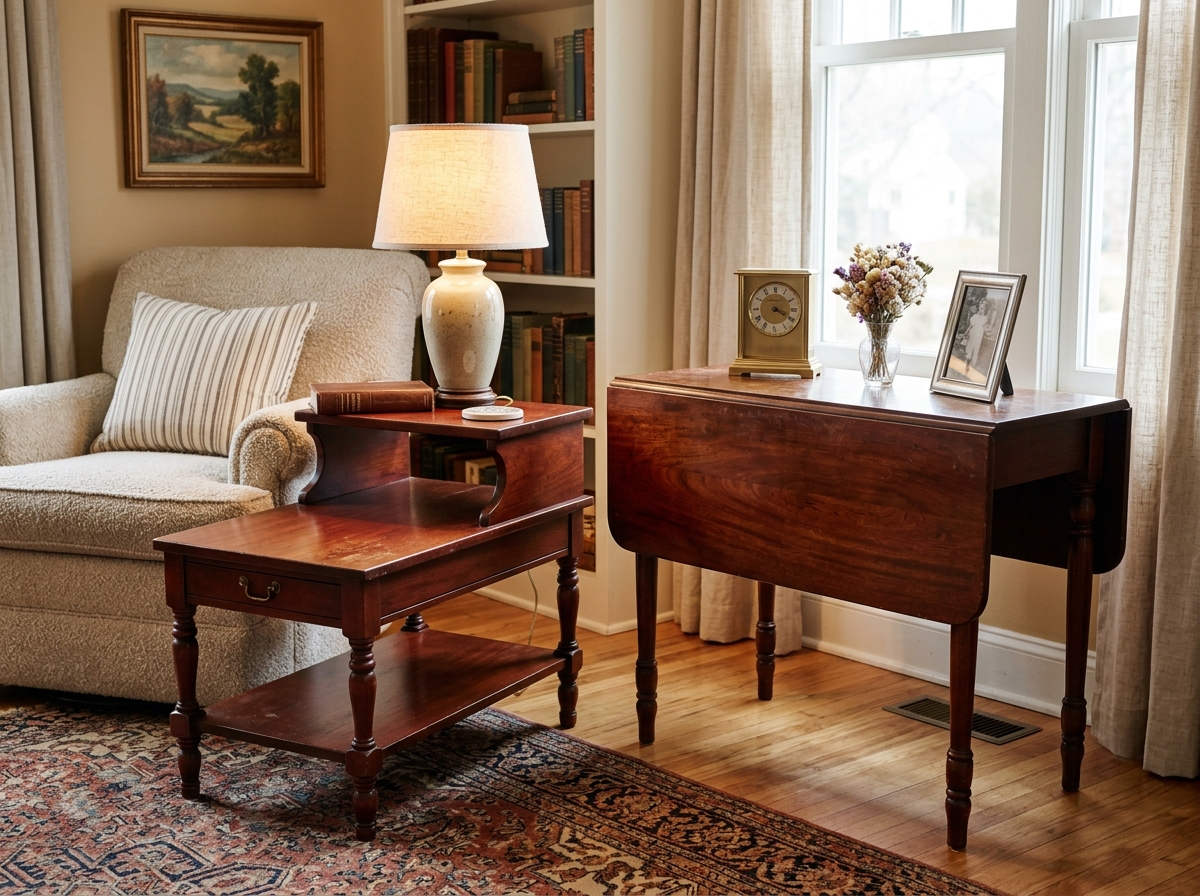
1. The Lyre / Harp Table (Model 7109 and Series)
Model 7109 is arguably the most famous table Mersman ever produced. Designed as a Colonial Revival homage to Duncan Phyfe tables, this occasional side table features a central pedestal shaped like a classical musical harp or lyre, complete with brass wire strings. It sits atop curved saber legs capped with stamped brass claw feet. Because millions were manufactured between 1935 and 1955, finding an authentic Model 7109 is common at estate sales across the United States.
2. Two-Tier Step End Tables (1940s–1950s)
Step tables were designed to flank modern living room sofas, with a lower surface for drinks or books and a raised upper tier to hold a table lamp. Mersman dominated this niche with models like the 8104 and 6632, crafted with reeded spindle legs and pie-crust or scalloped edges.
3. Drop-Leaf & Butterfly Tables
Mersman adapted traditional space-saving designs into affordable occasional furniture. Their drop-leaf side tables featured wooden pivot supports or metal slide arms beneath hinged flaps. If you are examining a drop-leaf piece, consult our comprehensive guide on antique drop-leaf table identification and value to understand hinge mechanics and rule joints.
4. Lou Hodges Mid-Century Modern Bentwood Tables (1960s–1970s)
In the late 1960s, Mersman collaborated with designer Lou Hodges to create sculptured bentwood coffee tables featuring smoked plate glass tops set into flowing solid oak or walnut frames. These sculptural pieces represent the highest-value segment of the Mersman market today, eagerly sought after by Mid-Century Modern (MCM) collectors.
Mersman Table Valuation Matrix: What Is Your Table Worth?
Because Mersman was a high-volume commercial manufacturer, values are driven by style demand and veneer condition rather than museum rarity. Below is an authentic market appraisal matrix based on current auction and estate sale realized prices:
| Mersman Style / Model | Era | Average Estate Sale Price | Pristine Retail / Online Price | Value Drivers |
|---|---|---|---|---|
| Standard 2-Tier Step End Table | 1940s–1955 | $25 – $60 | $75 – $125 (Pair) | Common design; value doubles if preserved as a matched pair. |
| Model 7109 Lyre / Harp Table | 1935–1950 | $85 – $150 | $175 – $250 | Intact brass harp strings, original brass claw feet, undamaged rim. |
| Drop-Leaf Side / Console Table | 1930s–1950s | $45 – $95 | $120 – $185 | Smooth leaf rule joints, working drawer, original brass pulls. |
| Coffee Table with Glass Insert | 1950s–1960s | $40 – $85 | $110 – $165 | Original scratch-free glass insert, intact leather or gold-tooled top. |
| Lou Hodges Bentwood MCM Coffee Table | 1968–1976 | $200 – $375 | $450 – $650 | High MCM collector demand; unchipped smoked glass, clean bentwood curves. |
Construction Forensics: Solid Wood vs. Veneer in Mersman Tables
A common misconception among beginner collectors is that “veneer means cheap or fake.” In vintage Mersman furniture, veneer was a deliberate engineering choice. During the 1930s and 1940s, Mersman used stable lumber-core construction: a solid core of kiln-dried yellow poplar or gumwood sandwiched between thin, book-matched sheets of decorative ribbon-stripe mahogany or figured American walnut.
This layered structure prevented tabletops from splitting or warping during seasonal humidity swings. To learn how authentic antique joinery differs from factory laminates, review our forensic guide on how to tell if a table is antique oak and explore our foundational guide to antique table styles.
Hardware Clues on Mersman Pieces:
- Screws: Pre-1955 Mersman tables use single-slot flathead machine screws to anchor the apron cleats. Post-1960 models incorporate cross-head Phillips screws. For a full breakdown of fastener timelines, see our collector’s guide to dating antique furniture by screws and hardware.
- Drawer Joinery: Mersman drawers typically feature machine-cut dovetails or tongue-and-groove drawer sides with stapled or grooved plywood bottom panels.
- Casters: Brass claw feet on Model 7109 tables are thin stamped brass sleeves secured with tiny brass brads, rather than heavy solid-cast brass paws found on original 1810 Federal pieces.
How to Clean, Wax, and Restore Vintage Mersman Finishes
Mersman tables were finished at the factory with sprayed nitrocellulose lacquer over aniline stain. Over 60–80 years, exposure to sunlight, drink glasses, and household polishes can cause the finish to cloud or haze.
- Removing White Heat Rings & Water Marks: Because nitrocellulose lacquer traps moisture beneath the surface, hot mugs create opaque white rings. Never use harsh chemical strippers. Instead, follow our tested protocol for how to remove white heat rings from antique wood using mild thermal release or oil treatments.
- Reviving Dry Mahogany & Walnut Finishes: Avoid silicone spray polishes, which penetrate veneer cracks and prevent future refinishing. Apply a microcrystalline paste wax or high-grade carnauba polish to protect the patina without greasy build-up. Follow our step-by-step instructions in the best wax for antique mahogany tables.
- Fixing Chipped Veneer Edges: Use color-matched wax fill sticks or burn-in sticks along table borders rather than sanding down the veneer, which is often only 1/28th of an inch thick.
Frequently Asked Questions
What does the 4-digit number on the bottom of a Mersman table mean?
The 4-digit number (such as 7109, 8104, or 6632) is an internal factory pattern or model number designating the specific table style in the Mersman sales catalog. It is not a manufacturing year or date code. For example, Model 7109 designates Mersman’s famous lyre-pedestal side table produced across the 1930s, 1940s, and 1950s.
Are Mersman tables solid wood or veneer?
The vast majority of vintage Mersman tables feature fine hardwood veneers (such as mahogany, walnut, or oak) applied over a solid secondary wood core like yellow poplar or gumwood. Mersman’s turned legs, harp lyres, and stretchers are solid hardwood, while the expansive flat table surfaces were veneered to prevent seasonal warping.
Where can I find the marking on my Mersman table?
Turn the table upside down in bright lighting and inspect the raw, unfinished wood underside of the top, the interior rim of the apron rails, or the bottom side of the drawer box. You will typically find a burned heat brand reading “MERSMAN” accompanied by a black stamped 4-digit number.
Are Mersman tables considered valuable antiques?
Mersman tables are generally considered accessible vintage collectables rather than high-value museum antiques because the company produced over 30 million pieces. Most standard end and coffee tables sell between $25 and $125. However, Model 7109 lyre tables can fetch up to $250, and Lou Hodges mid-century bentwood designs regularly command $400 to $650.
Pingback: Dating Antique Furniture by Screws & Hardware: The Forensic Collector’s Guide - Antique Tables
Pingback: How to Tell if a Table is Antique Oak: Quartersawn, Tiger Oak & Joinery Clues - Antique Tables
Pingback: Duncan Phyfe Table Identification: How to Spot an Original vs 1940s Reproduction - Antique Tables