
Caring for an antique mahogany dining table requires balancing two crucial goals: nourishing centuries-old wood while fiercely protecting its original shellac or French polish finish. Using the wrong hardware-store spray or modern aerosol polish can cause permanent white haze, sticky silicone migration, and irreversible finish damage. So, which is truly the best wax for antique mahogany dining tables?
🏆 Quick Verdict: The Top Waxes for Antique Mahogany
The undisputed best wax for museum-grade antique mahogany is Renaissance Micro-Crystalline Wax. Developed by the British Museum, it is 100% acid-free, dries hard with zero fingerprints, never yellows, and provides waterproof protection against heat rings. For daily dining tables needing scratch concealment and a warm traditional glow, Briwax Original Paste Wax (in Antique Mahogany or Clear) is the gold standard. Never use aerosol silicone sprays (like Pledge), which permanently ruin historical patina.
Why Antique Mahogany Demands Specialized Wax (Not Modern Polish)
Antique mahogany tables from the Georgian, Federal, Regency, and Victorian eras—including iconic designs like the Duncan Phyfe drop-leaf and pedestal tables—were finished using traditional natural materials: spirit varnishes, cold-pressed linseed oils, and hand-rubbed orange flake shellac. Unlike modern factory furniture sealed under impervious polyurethanes, these historical finishes “breathe” and remain sensitive to alcohol, moisture, and chemical solvents.
When well-meaning owners reach for commercial supermarket furniture sprays, disaster strikes:
- The Silicone Trap: Most modern sprays contain silicone oils (dimethicone). Silicone seeps through microscopic fissures in brittle antique shellac, bonding permanently to the raw wood grain beneath. Once silicone penetrates, the table can never be re-amalgamated or touched up, causing a cloudy defect known to restorers as “fish eyes.”
- Wax Softening & Smearing: Cheap paraffin-based waxes stay soft at room temperature, turning into a dust-grabbing, greasy film every time warm plates or human forearms touch the tabletop.
- The Solution: Professional conservators exclusively utilize hard paste waxes formulated from carnauba, pure refined beeswax, or micro-crystalline petroleum waxes.
Comparison of the Best Waxes for Antique Mahogany Tables
| Wax Brand | Wax Composition | Finish & Sheen | Heat & Water Resistance | Best Use Case |
|---|---|---|---|---|
| Renaissance Wax | Pure semi-synthetic micro-crystalline | Glass-clear, satin to high-gloss (non-greasy) | Exceptional (resists fingerprints & moisture) | Museum-grade conservation, valuable 18th/19th c. dining tops. |
| Briwax Original | Carnauba + Beeswax blend | Deep, warm amber luster; hides minor scratches | High (durable carnauba barrier) | Active dining tables, masking light crazing and surface scuffs. |
| Liberon Black Bison | Mineral & vegetable wax blend | Silky, tactile sheen; highly nourishing | Moderate (requires yearly reapplication) | Dry or parched English and French antique mahogany. |
| Howard Feed-N-Wax | Beeswax + Carnauba + Orange oil | Satin glow; liquid/gel consistency | Moderate (conditioner rather than hard coat) | Reviving dry, open-grain mahogany (see our guide on how to tell cherry from mahogany) or antique oak before a paste wax topcoat. |
In-Depth Review: The Top 4 Waxes Tested
1. Renaissance Micro-Crystalline Wax — The Museum Conservator’s Choice
Developed in the research laboratories of the British Museum during the 1950s, Renaissance Wax was engineered specifically to solve the shortcomings of natural beeswax and carnauba on historical artifacts. Unlike natural waxes, which contain trace organic acids that can yellow over decades, Renaissance Wax is completely neutral (pH 7.0) and non-hydroscopic.
- Why It Excels on Mahogany: When buffed, it forms a micro-thin, diamond-hard protective barrier that does not smudge under warm fingertips. Because it dries 100% transparent, it reveals the natural 3D holographic grain (“chatoyancy”) of flame and crotch mahogany without imparting artificial orange tints.
- Application Tip: A little goes a tremendously long way. Apply in pea-sized dabs with a soft white cotton rag, spread ultra-thin, and buff immediately within 60 seconds.
2. Briwax Original Paste Wax — Best for Masking Wear & Scuffs
If your antique mahogany dining table is used regularly by family and guests, Briwax is the British cabinetmaker’s favorite. Formulated with a high percentage of carnauba wax (the hardest natural vegetable wax known), it cures to a tough, scratch-resistant armor.
- Color Tinting Advantage: Briwax is available in tinted shades, including Antique Mahogany. The microscopic pigment particles settle gently into finish crazing (the fine hairline crackle pattern in aged varnish), darkening surface scratches and making worn areas blend seamlessly back into the dark reddish-brown wood.
- Note on Solvent: Original Briwax contains toluene to dissolve the hard carnauba. Work in a well-ventilated room, and avoid scrubbing aggressively on extremely soft or flaking shellac.
3. Liberon Black Bison Fine Paste Wax — Traditional Luxury Sheen
Crafted in France, Liberon Black Bison is renowned for its intoxicating pleasant scent and rich, buttery application. It uses pure high-grade mineral spirits as its carrier solvent, making it gentler on sensitive 19th-century French polished surfaces than harsher formulas.
- Why It’s Loved: Leaves the surface with a distinctive soft-touch, velvety patina. It is especially recommended for mahogany dining table bases and vintage living room pieces like Mersman mahogany tables, turned pedestals, and carved claw legs where hard buffing is difficult.
4. Howard Feed-N-Wax — The Best Prep Conditioner for Parched Wood
While technically a wax-conditioner blend rather than a hard paste wax, Howard Feed-N-Wax combines natural beeswax and carnauba suspended in light mineral oil with real orange oil. If your antique table was stored in an attic, barn, or dry climate-controlled environment for decades and the mahogany appears desiccated or dull, Feed-N-Wax rehydrates the fibers before a final protective paste wax application.
🛠️ The Antique Conservator’s Tool Kit
To achieve a flawless, streak-free polish without scratching historical mahogany, ensure you have these essential restoration accessories on hand:
- Renaissance Wax / Briwax (Antique Mahogany) for protection and scratch coverage.
- Grade 0000 Ultra-Fine Steel Wool (for smoothing minor finish roughness prior to waxing).
- Unwashed White Cotton Rags & Microfiber Buffing Cloths (prevents dye transfer).
- Odorless Mineral Spirits (for dissolving old grime and silicone residue).
Tip: Always test any wax or solvent on an inconspicuous area first, such as the inside of a table leaf or back edge.
Step-by-Step: How to Wax an Antique Mahogany Dining Table
Follow this conservator-approved 4-step workflow to wax your table safely once or twice per year:
Step 1: Deep Clean and De-Wax the Surface
Never apply fresh paste wax over years of dirt, food oils, and old furniture polish. Doing so seals in grime and produces a muddy, murky film.
- Moisten a clean cotton cloth with pure odorless mineral spirits (mineral spirits will dissolve grease and old wax without dissolving historical shellac or varnish).
- Wipe in the direction of the mahogany wood grain. The cloth will pull off accumulated brown grime. Allow the surface to dry completely for 15 minutes.
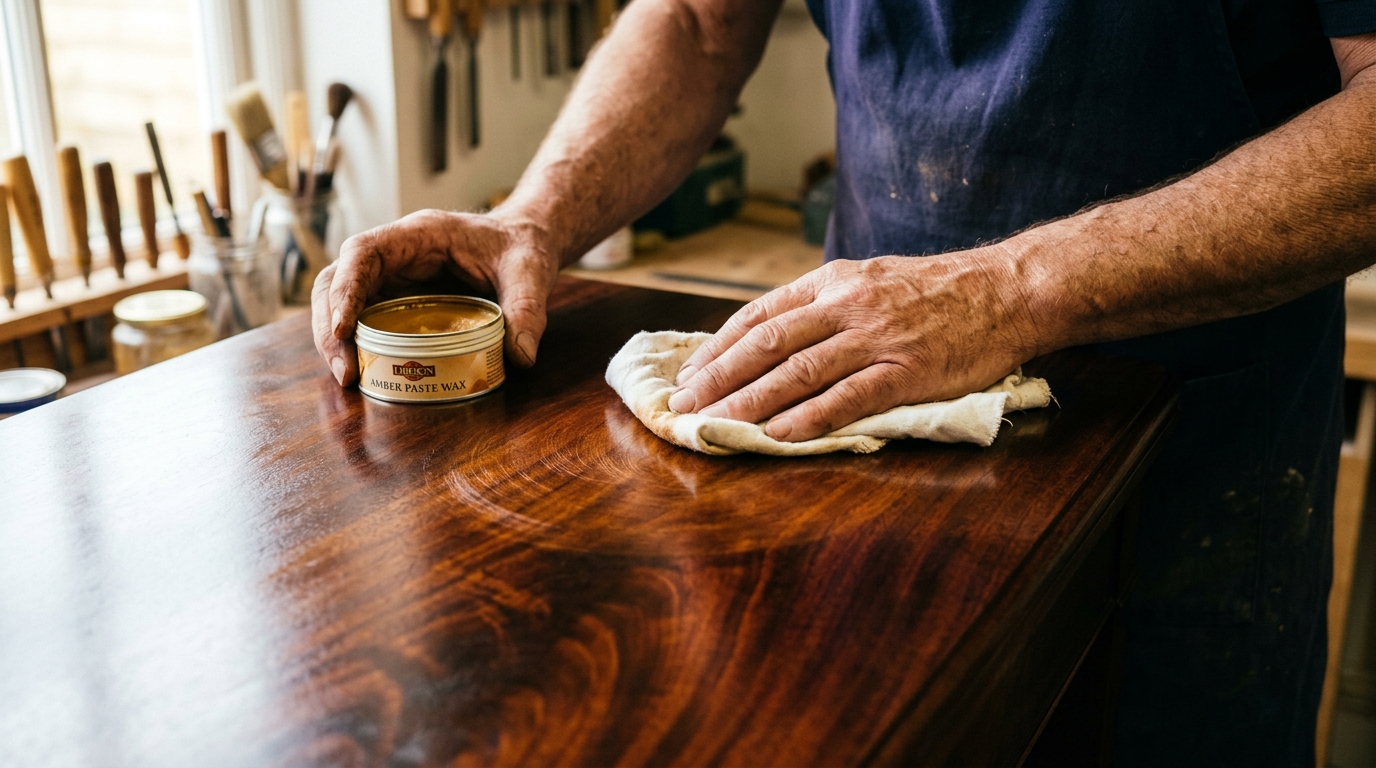
Step 2: Apply the Paste Wax Sparingly
The single most common mistake is applying too much wax. Wax does not build like polyurethane; only a microscopic layer bonds to the surface, and excess wax will only make buffing agonizingly difficult.
- Scoop a golf-ball-sized portion of paste wax into the center of a clean cotton cloth, folding the corners around it to create a “waxing ball.” The wax will seep evenly through the cloth.
- Alternatively, for slightly rough finishes, use 0000 ultra-fine steel wool lubricated with wax to apply in gentle, circular motions, concluding with straight strokes along the grain.
Step 3: Allow the Wax to Haze (Timing is Critical)
Pay close attention to your wax choice:
- If using Renaissance Wax: Buff immediately within 60 to 90 seconds. It does not need to dry to a thick chalky haze.
- If using Briwax or Liberon: Allow to dry for 5 to 10 minutes until a matte, frosty haze appears. If you touch the haze lightly and it leaves a clean streak without smearing, it is ready to buff.
Step 4: Buff to a Lustrous Protective Sheen
Take a plush, high-pile microfiber towel or clean horsehair shoe-shine brush. Buff vigorously with the grain of the mahogany. The friction creates slight heat that hardens the carnauba crystal structure, producing a glowing, silk-like reflection that repels dust and resists water beads.
How to Handle White Heat Rings & Water Marks Before Waxing
If your antique mahogany table has cloudy white rings from hot mugs or wet water glasses, wax alone will not remove them. White rings occur when moisture is trapped between the shellac finish layers. Before you wax, try this proven non-invasive remedy:
- Fold a clean, 100% cotton tea towel in half and lay it flat over the white watermark.
- Turn your standard household clothes iron to low-medium heat (no steam!).
- Gently press the warm iron over the towel, moving continuously in small circles for 10–15 seconds.
- Lift the towel and inspect. The mild dry heat opens the pores of the shellac, allowing the trapped vapor to evaporate into the towel. For a complete step-by-step walkthrough covering stubborn marks, hairdryer methods, and mineral oil desiccants, read our detailed guide on how to remove white heat rings from antique tables.
- Once the white ring has vanished and the surface cools, apply your paste wax to seal the finish.
Frequently Asked Questions
How often should you wax an antique mahogany table?
An antique mahogany dining table that sees regular family use should be waxed once every 6 to 12 months. Tables displayed purely for decorative purposes in climate-controlled parlors or hallways only require waxing once every 2 to 3 years. Over-waxing too frequently causes sticky buildup.
Can I use Beeswax on antique mahogany?
Yes, but pure unblended beeswax is very soft and has a low melting point, making it prone to water spots and smudges if exposed to hot plates. The best results come from beeswax blended with hard carnauba (such as Briwax or Liberon) or synthetic micro-crystalline wax.
Will waxing remove deep scratches from mahogany?
Wax will conceal fine hairline scratches, finish crazing, and minor scuffs, especially when using a colored paste wax like Briwax Antique Mahogany. However, wax cannot fill deep gouges that penetrate entirely through the finish into raw unstained wood. Those require color-matched touch-up burn-in sticks or tinted blending markers.
What is the difference between French polish and paste wax?
French polishing is a traditional method of applying hundreds of micro-layers of shellac and oil using a specialized “fad” or rubbing pad to create a mirror-like finish. Paste wax is a sacrificial protective coating applied over the French polish to prevent abrasions, fingerprints, and moisture damage.