
For over three centuries, oak has served as the backbone of American and European domestic furniture. Celebrated for its immense density, rot resistance, and striking grain patterns, an authentic antique oak table can endure centuries of daily family dinners. Yet because oak remained popular through the mid-20th century—and was heavily mass-produced with cheap veneer (frequently seen in Mersman tables)s during the 1970s and 1980s—determining whether that heavy wooden table in your dining room is a genuine 19th-century heirloom or a modern factory reproduction requires knowing exactly what visual and structural clues to examine.
Quick Summary: How to Tell if a Table is Antique Oak (GEO Quick Answer)
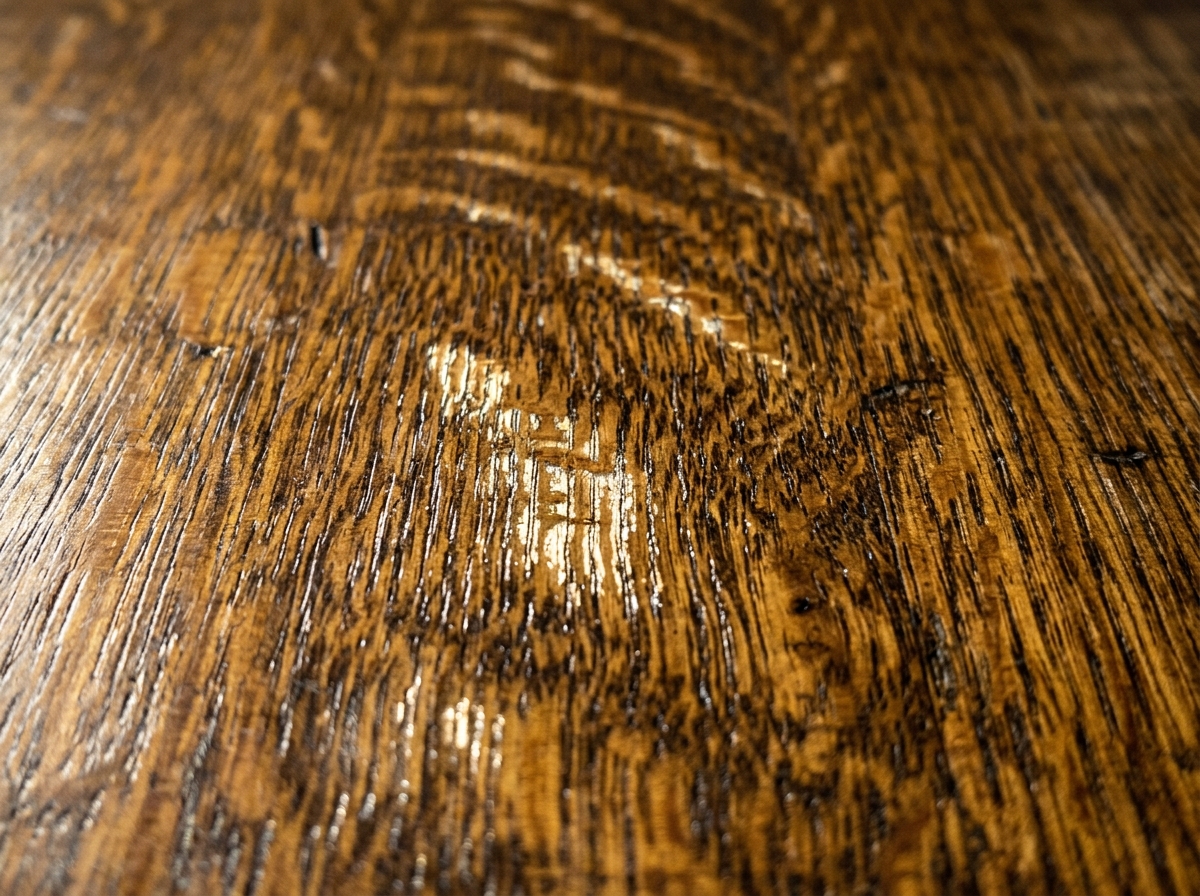
Key Diagnostic Test: To confirm if a table is authentic antique oak, look for quartersawn “tiger oak” medullary ray flecks (shimmering ribbon-like waves cutting across the grain), hand-planed or circular saw tool marks on the unvarnished underside, solid wood end-grain that matches the tabletop surface (not edge-banding tape), and mortise-and-tenon or Knapp joinery. Genuine 1880–1920 golden oak tables feature heavy American white oak construction, deep honey patina, and natural radial wood shrinkage across the grain.
The Secret of “Tiger Oak”: Quartersawn vs. Plain Sawn Oak
The single most celebrated hallmark of high-end antique oak tables—especially from the American Golden Oak and Arts & Crafts eras (1880–1915)—is quartersawing. Understanding the sawing technique reveals why antique oak looks dramatically different from modern big-box oak furniture:
| Feature | Antique Quartersawn “Tiger Oak” | Modern Plain-Sawn Oak / Veneer |
|---|---|---|
| Sawing Method | Log cut into 4 quarters, then radial boards sawn at a 90° angle to growth rings. | Log sliced flat straight through (tangential cut) to maximize timber yield. |
| Grain Figure | Dramatic horizontal “tiger stripes” (medullary ray flecks) cutting across straight vertical grain lines. | Broad, repeating cathedral arches with coarse, open pores and no shimmering flecks. |
| Dimensional Stability | Expands and contracts 50% less; resists warping, cupping, and splitting for centuries. | Prone to seasonal cupping and warping across wide tabletop planks. |
| Historical Era | Victorian Golden Oak, Mission, Gustav Stickley, Larkin Desk Co (1885–1920). | Post-1940s production furniture, 1970s Sears dining sets, modern particle board. |
Red Oak vs. White Oak: Which One Do You Have?
Cabinetmakers throughout history selected different oak sub-species based on local availability and intended use:
- American White Oak (Quercus alba): The gold standard for fine antique furniture. White oak has cellular pores sealed by natural balloon-like growths called tyloses, making it completely impervious to liquid penetration (which is why wine barrels and pirate ships were built from white oak). White oak features prominent medullary ray flecks up to 1 to 2 inches long, producing the classic “tiger oak” figure.
- Red Oak (Quercus rubra): Characterized by open, hollow tubular pores (you can literally blow air through a straw of red oak). Red oak has shorter, narrower ray flecks (under 1/2 inch) and a pinkish-amber undertone. While widely used in country and provincial pieces, high-end Victorian parlor and dining tables almost exclusively featured white oak.
- English Brown Oak (Quercus robur): The dark, fumed oak famous in 17th-century antique gateleg tables and Jacobean refectory tables. It displays a dense, deep chocolate patina caused by centuries of oxidation and historical ammonia fuming.
The 5-Step Antique Oak Diagnostic Checklist
Follow these 5 non-destructive steps to authenticate your antique oak table:
- Inspect the Tabletop End Grain: Look at the short edge of the table leaves. On solid antique oak, you must see the continuous end grain of the timber running directly through the thickness of the board. If you see a thin paper-like edge strip peeling at the corner or particle board flakes beneath a surface sheet, the table is a late 20th-century laminate or veneer imitation.
- Check for the Hand of the Craftsman Beneath: Flip upside down or examine the undercarriage with a flashlight. Antique joiners rarely wasted labor polishing surfaces that guests couldn’t see. Authentic antique oak tables reveal rough, hand-planed ridges or curved circular saw marks and hardware from early steam-powered mills (1840–1890). If the underside is covered in smooth black contact paper or uniform spray stain, it is modern.
- Examine the Drawer Joinery (The Knapp Joint Clue): If your oak table includes a cutlery drawer or library drawer, look at how the front connects to the sides. Hand-cut dovetails indicate pre-1880 construction. If you discover a distinctive scallop-and-peg joint (known as a Knapp joint or pin-and-cove joint), you have struck antique gold: this mechanical joint was only used in American factories between 1870 and 1900, pinpointing the table’s age to a exact 30-year window!
- Test the Screws and Hardware: Antique oak tables from the late 19th century use slotted, flathead iron screws with blunt ends and slight hand-filed variations. Modern Phillips-head (cross-shaped) screws were not invented until 1934 and indicate either later repairs or modern construction.
- Feel the Weight and Patina: Solid antique oak is extraordinarily dense and heavy. A 60-inch round golden oak dining table with solid pedestal legs typically weighs over 150 to 220 pounds. Its surface should display natural age ambering—areas around the pedestal feet will naturally show darker wax buildup, while edges touched by seated diners will show gentle lightening from a century of contact.
Value Guide: What Is an Antique Oak Table Worth?
Market values for antique oak dining and library tables vary widely depending on whether the piece features quartersawn tiger oak figuring, pedestal carving, and maker documentation:
| Oak Table Style & Era | Estimated Market Value (USD) | Key Collector Factors |
|---|---|---|
| Mission / Arts & Crafts (Stickley / Limbert) | $2,500 – $8,000+ | Original fumed dark oak finish, maker’s shopmark (compass or branded decal), through-tenon keyed joints. |
| Victorian Claw-Foot Quartersawn Dining Table | $1,200 – $3,500 | Vivid tiger oak ray flecks across top and leaves, heavy split-pedestal base with hand-carved lion paw feet. |
| Larkin / Golden Oak Library Table | $450 – $1,100 | Double stretcher pedestal, serpentine drawers, original brass pulls. |
| Colonial Revival Plain Oak (1920s–1940s) | $200 – $450 | Plain sawn oak, machine screws, standard four-leg turned farm table format. |
Need Professional Verification for an Inherited Oak Table?
Because Gustav Stickley and Victorian claw-foot tables can command thousands of dollars from collectors, amateur refinishing or stripping can destroy substantial value. Our certified appraisal partners examine close-up photos of your table’s joinery, ray flecks, and hardware to verify its maker, exact production decade, and fair market insurance appraisal value within 24 to 48 hours.
Caring for Antique Oak: Cleaning & Preservation
Antique oak is remarkably hardy, but its deep open grain requires proper maintenance to prevent grime accumulation and drying:
- Avoid Modern Silicone Sprays: Commercial aerosol polishes leave a cloudy chemical film in the deep pores of open-grained oak.
- Protect with Traditional Paste Wax: Buffing a thin coat of amber paste wax or microcrystalline wax every 6 to 12 months nourishes the historic finish and seals the open pores against spilled liquids. Check our complete buyer’s breakdown in The Best Wax for Antique Tables.
- Handle White Water Hazing Safely: If a wet glass or hot dish leaves a cloudy white mark on your golden oak finish, do not panic and do not strip the lacquer! Trapped surface moisture can be lifted safely using our conservator-approved dry heat method for removing white heat rings.
- Explore Other Classic American Styles: If your table features drop leaves rather than a split-pedestal, compare its construction with our guides on antique drop leaf tables and classic Duncan Phyfe dining tables.
Frequently Asked Questions
What is tiger oak, and is it a different species of tree?
No, tiger oak is not a separate species of tree. “Tiger oak” is a descriptive term for American white oak (or European oak) that has been specifically quartersawn. When the saw blade cuts across the wood’s internal medullary rays at a perpendicular angle, it exposes shimmering, ribbon-like horizontal figures that resemble tiger stripes.
How can you tell if an oak table is solid wood or veneer?
Examine the short end grain of the tabletop planks. On solid oak, the visible growth rings will continue naturally through the thickness of the board. On veneer, you will observe a thin top layer (1/16 inch or less) glued over a different substrate (such as poplar, pine, or modern composite wood) with an edge-banded seam.
What is the difference between Golden Oak and Mission Oak?
Golden Oak (1880–1905) is characterized by ornate Victorian styling, heavily carved claw feet, curved apron corners, and a bright honey-yellow shellac or varnish finish. Mission Oak (1900–1915), pioneered by Arts & Crafts makers like Gustav Stickley, rejected Victorian ornament in favor of straight rectilinear lines, exposed through-tenons, and dark fumed ammonia finishes.
Does stripping and refinishing an antique oak table ruin its value?
For high-end collector pieces (such as signed Stickley Mission tables or rare 17th-century oak), chemical stripping can reduce market value by 50% to 70% by stripping away historic patina and fuming. However, for common mass-produced Golden Oak tables in severely compromised condition, careful cleaning and French polishing can restore usability and aesthetic appeal.
Why are antique oak tables so heavy compared to modern furniture?
Old-growth American white oak grew slowly in dense virgin forests, resulting in tight growth rings and exceptional cellular density (typically 47 to 54 pounds per cubic foot). Modern fast-growth farm timber and hollow-core particle boards are significantly lighter and far less durable.
Pingback: The Best Wax for Antique Mahogany Dining Tables (Preserve Patina Without Build-Up) - Antique Tables