
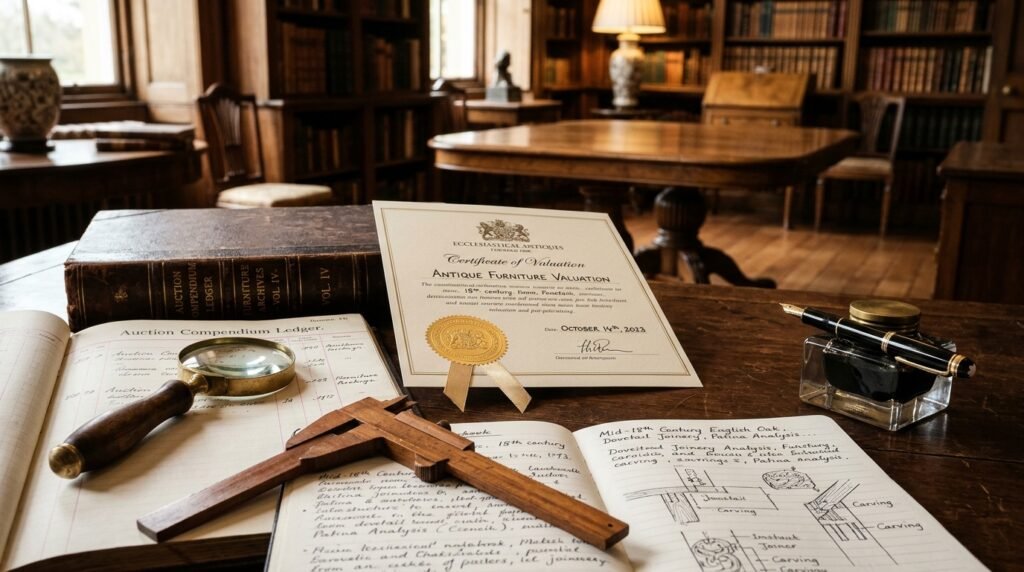
Online Antique Table Appraisals from Photos: The Definitive Guide
Don’t risk underpricing an authentic family heirloom at an estate sale or overpaying at auction. Discover how professional photo-based furniture appraisals work, what diagnostic angles certified specialists require, and compare top-rated online valuation platforms.
How Online Furniture Appraisals Work
For centuries, appraising antique furniture required transporting heavy mahogany dining suites or fragile tea tables to regional auction houses. Today, advances in digital macro photography and decorative arts databases allow accredited appraisers (certified through the International Society of Appraisers, Appraisers Association of America, or Royal Institution of Chartered Surveyors) to authenticate furniture directly from high-resolution digital photographs.
1. Joinery & Tool Mark Analysis
Specialists examine whether dovetails are hand-cut or machine-cut, check for pit-saw or circular saw kerfs, inspect wooden pins for ovalization, and verify screw slot asymmetry.
2. Timber Species Diagnostics
Distinguish rare 18th-century Cuban mahogany from modern African substitutes, verify quartersawn tiger oak medullary rays, and inspect secondary drawer woods (white pine, poplar, oak).
3. Maker Attribution & Provenance
Cross-reference stencils, paper shop labels, burned compass brands (Stickley), or hardware numbers (Mersman, Imperial, Baker) against proprietary manufacturer archives.
The 6 Photos Every Appraiser Needs
The accuracy of any online furniture appraisal depends directly on the quality of your photographs. Before submitting your table to an appraisal service, take these 6 clear, well-lit photos:
Clean three-quarter shot showing the complete table silhouette, proportion, and stance.
Close-up showing the primary wood figure, finish condition, wear, and any inlay crossbanding.
Flashlight photo beneath the apron showing corner blocks, saw marks, and mortise-and-tenon joints.
Side view of an opened drawer showing the front and back dovetail pins and secondary wood.
Close-up of leg carving, claw feet, pad feet, or brass caster wheels and attachment screws.
Clear macro shot of any paper labels, burned brands, metal tags, or stamped model numbers.
Top-Rated Online Antique Appraisal Services (2026 Comparison)
If you need an accredited third-party appraisal for estate sales, insurance coverage, or selling on the private market, compare these vetted platforms:
JustAnswer Antiques & Collectibles
FASTEST RESPONSEConnect 1-on-1 with verified antique furniture specialists and appraisers 24/7. Upload photos from your phone and receive instant feedback on historical era, maker marks, and realistic market valuations within minutes.
Mearto (by Auctionet)
AUCTION SPECIALISTSSpecialized appraisal platform staffed by former Sotheby’s, Christie’s, and regional auction house specialists. Provides documented fair market estimates and consignment recommendations for high-value 18th- and 19th-century furniture.
ValueMyStuff
FORMAL CERTIFICATESDelivers formal, accredited appraisal certificates suitable for insurance policies, estate tax settlement, and charitable donation documentation, prepared by over 60 vetted experts.
Disclosure: Antique Tables Co. provides educational identification resources and independently reviews appraisal providers. When you submit through our recommended partners, we may earn an affiliate commission at no extra cost to you.
Understanding Valuation Terms: FMV vs. Insurance vs. Auction
Fair Market Value (FMV)
The agreed price between a willing buyer and willing seller in an open market. Crucial for estate distribution, divorce settlements, and tax reporting.
Replacement Value
The cost to replace an antique with a comparable piece in similar condition within a limited timeframe. Typically 30%–50% higher than auction realization; used for insurance.
Auction Realization
The actual hammer price achieved at public competitive auction plus buyer’s premium. Reflects immediate liquidity and true collector demand.
Estate Liquidation
The expected net return when selling an item quickly under forced or time-sensitive conditions, such as moving or estate clearing.
Frequently Asked Questions About Online Appraisals
How accurate is an antique table appraisal from photos?
When provided with clear high-resolution photographs of joinery, secondary timbers, hardware, and surface patina, accredited specialists can date and attribute authentic antique tables with 95%+ accuracy. Photos reveal hand-plane marks, authentic screw threading, natural wood shrinkage ovalization, and faked distress patterns.
Can an online appraisal tell me who made my table if there is no label?
Yes. Many of the finest 18th- and 19th-century cabinetmakers (including Duncan Phyfe, Thomas Chippendale, and regional Newport workshops) rarely labeled their work. Appraisers attribute unsigned pieces by analyzing signature proportions, carving idiosyncrasies, distinctive leg turnings, and regional secondary wood combinations.
How much does an online antique appraisal typically cost?
Online appraisals typically range from $15 to $50 per item, depending on the service level. Fast chat-based evaluations cost less, while formal digitally signed certificates with verified auction comparables for insurance policies range between $35 and $55 flat.
Does refinishing an antique table ruin its appraisal value?
Chemical stripping and modern polyurethane application reduce collector auction value by 40% to 75%. However, museum-grade conservation cleaning or gentle shellac revival that preserves historic patina does not harm value and can often stabilize the timber.