
To tell cherry from mahogany in antique furniture, inspect the wood grain for pitch pockets and optical ribbon figure. American black cherry (Prunus serotina) features a closed, satiny grain punctuated by small dark resin streaks called “pitch pockets,” aging from pale salmon into a glowing amber-red patina. Mahogany (Swietenia) has an open, diffuse-porous texture, completely lacks pitch pockets, and exhibits shimmering 3D “chatoyancy” with distinctive ribbon stripe bands. Examining unexposed raw timber underneath the tabletop provides instant confirmation.
Key Forensic Wood Differences at a Glance
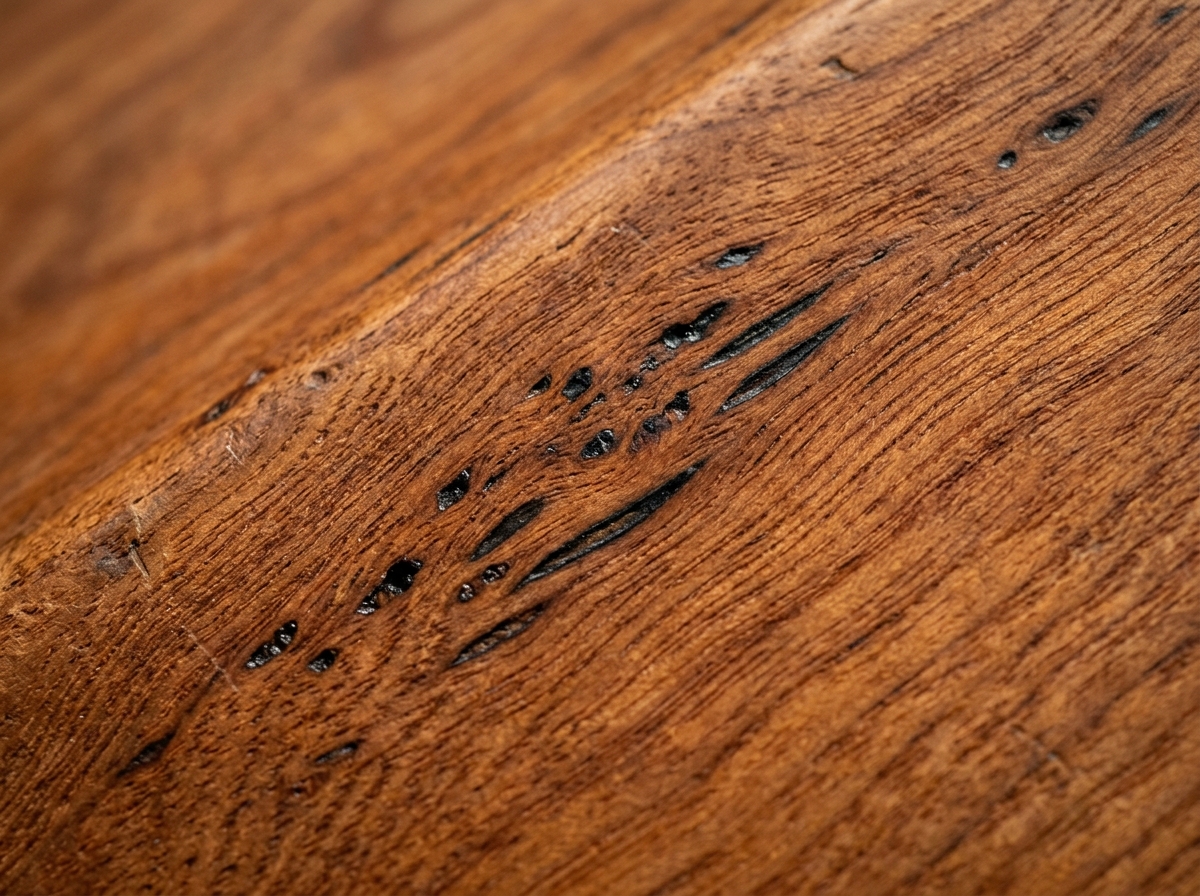
- The Pitch Pocket Test: Look for tiny, dark, lens-shaped resin flecks. If you find pitch pockets, the wood is definitively black cherry. Mahogany never produces resin pockets.
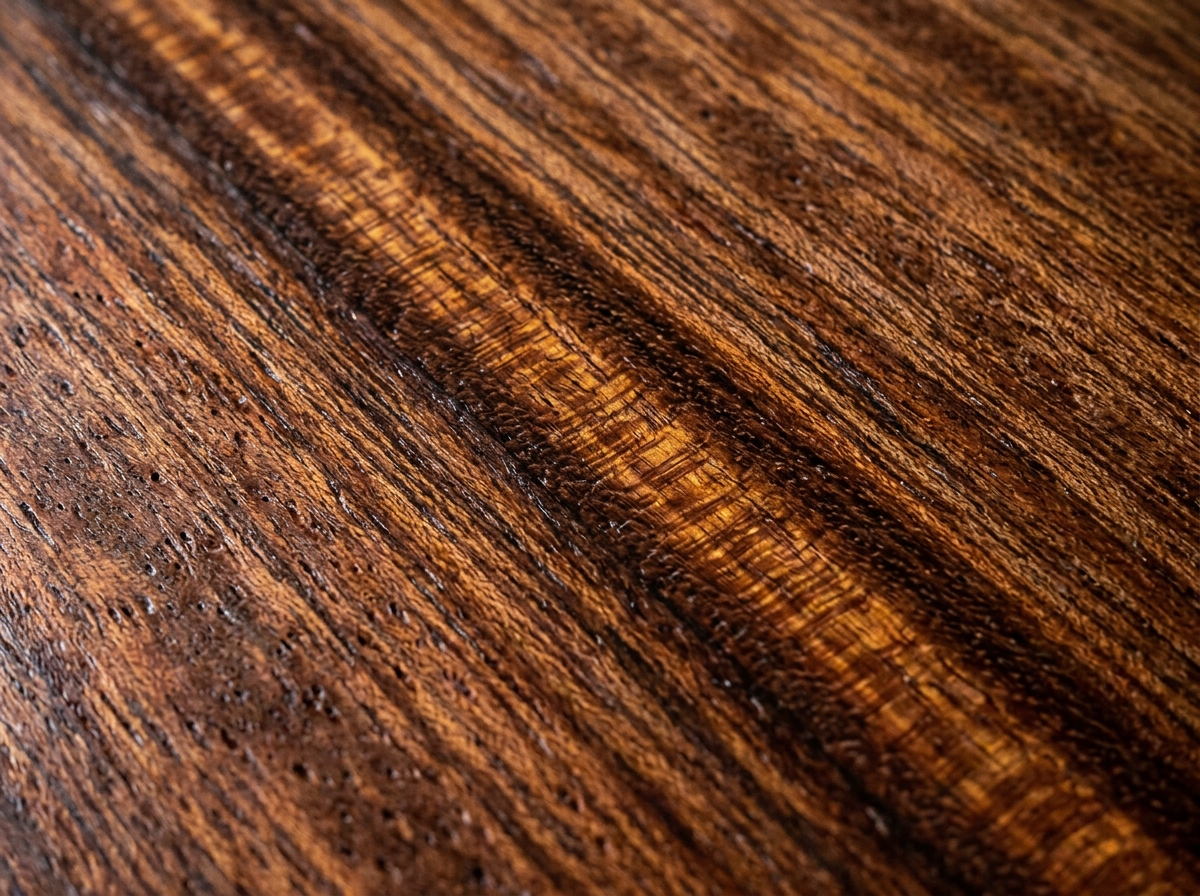
- The Ribbon Stripe Test: Move your head side-to-side in raking light. If alternating bands of light and dark wood shift like silk ribbons (chatoyancy), the wood is quarter-sawn mahogany.
- Pore Structure Under 10x Magnification: Mahogany displays visible open oval pores resembling tiny pencil pinpricks. Cherry has microscopic, tightly packed pores that feel silky-smooth like polished marble.
- Weight & Density: Historic Cuban mahogany is dense, heavy, and cold to the touch (up to 53 lbs/cu.ft.). American cherry is noticeably lighter, warmer, and more resilient (approximately 35 lbs/cu.ft.).
- Regional Origin Clues: Cherry was the primary luxury hardwood of American country cabinetmakers (Shaker, Pennsylvania, New England). Mahogany was an expensive import reserved for high-style urban shops in Philadelphia, Boston, and New York.
The Aging Paradox: Why Cherry and Mahogany Confuse Collectors
When lumber is freshly milled, confusing cherry with mahogany is virtually impossible. Freshly cut American black cherry is a light pinkish-tan or pale salmon color with creamy sapwood edges. In contrast, fresh South American or West Indian mahogany is naturally reddish-brown or deep burgundy from the moment it is sawn.
However, over 100 to 200 years of environmental exposure, cherry undergoes dramatic photochemical oxidation. Ultraviolet sunlight and oxygen react with natural wood compounds, transforming cherry into a rich, deep, reddish-brown patina. Furthermore, 18th- and 19th-century American cabinetmakers frequently treated native cherry with potassium bichromate or dragon’s blood stain to mimic the prestige of imported mahogany. By the time a table reaches an estate sale today, the surface color can appear virtually identical.
5 Forensic Tests to Distinguish Cherry from Mahogany
Do not rely on surface color alone. Instead, use these five tactile and optical diagnostics to identify the wood species with scientific accuracy:
1. The Pitch Pocket Test (Cherry’s “Smoking Gun”)
As wild American black cherry trees grow, they produce sap and resin in response to wind stress, insect boring, and seasonal droughts. These resin reserves become permanently encapsulated in the timber as small, dark, lens-shaped streaks measuring 1/16 to 1/2 inch in length. Known to woodworkers as pitch pockets or gum veins, these black specks are the definitive hallmark of cherry. Mahogany never develops pitch pockets. If you spot even a few dark resin streaks across a tabletop or drawer front, you are looking at cherry.
2. Chatoyancy & The Ribbon Stripe Figure (Mahogany’s Hallmark)
Mahogany trees grow with an interlocking spiral grain. When logs are quarter-sawn, this spiraling fiber reflects ambient light with a mesmerizing 3D optical phenomenon called chatoyancy (the “cat’s-eye effect”). The surface appears to possess alternating vertical bands of light and dark amber-red that shift luminescence as you change your viewing angle. While cherry can display subtle curl or fiddleback figure on rare occasion, it never exhibits the bold, holographic ribbon stripes characteristic of Duncan Phyfe mahogany tables.
3. Pore Anatomy Under a Magnifying Glass
Take a 10x jeweler’s loupe or smartphone camera macro lens and inspect a clean, unvarnished section of the wood in raking sunlight:
- Mahogany (Diffuse-Porous): Mahogany has relatively large, open vascular tubes distributed evenly across the growth rings. In finished furniture, these appear as tiny dark dashes or micro-slits running parallel to the grain. Unless filled with grain filler during finishing, mahogany surfaces retain a subtle tactile texture.
- Cherry (Semi-Ring Porous / Closed Grain): Cherry has exceptionally small, microscopic pores. The surface feels satiny, porcelain-like, and smooth to the touch, lacking the visible open vascular pores of mahogany.
4. The Underside “Raw Wood” Inspection
Because show surfaces were heavily varnished and exposed to 100+ years of light, the true wood color is often disguised. Turn the table upside down or inspect the interior of the apron frame, drop-leaf underside, and drawer runners. In areas shielded from UV rays and stains:
- Raw Cherry: Appears creamy tan, golden-salmon, or pale pinkish-brown.
- Raw Mahogany: Retains a distinct deep reddish-pink, cinnamon, or rich burgundy cast.
5. Weight, Density & Heartwood Heft
If you lift an antique table, its weight provides a powerful contextual clue. Historic 18th-century “Cuban” or “Santo Domingo” mahogany (Swietenia mahagoni) was sourced from dense old-growth Caribbean virgin timber. It is extraordinarily dense and heavy, weighing 45 to 53 pounds per cubic foot. American black cherry (Prunus serotina) is significantly lighter (averaging 35 pounds per cubic foot) and feels springier and more resonant when tapped with a knuckle.
Chronological Species Comparison Matrix
| Diagnostic Feature | American Black Cherry | Antique Mahogany (Honduran / Cuban) |
|---|---|---|
| Botanical Species | Prunus serotina (Domestic US) | Swietenia mahagoni / Swietenia macrophylla (Import) |
| Pitch Pockets (Resin Specks) | Present (Small dark gum streaks throughout) | Completely Absent |
| Pore Structure | Closed, fine, semi-ring porous (satiny feel) | Open, diffuse-porous (visible linear dashes) |
| Grain Figure & Chatoyancy | Uniform, smooth; subtle curl or flame occasionally | Dramatic 3D ribbon stripes, crotch flame, high chatoyancy |
| UV Aging Transformation | Darkens significantly from pale pink to amber-red | Maintains rich red-brown; bleaches to golden-brown in sun |
| Average Dried Weight | ~35 lbs/cu.ft. (Medium heft) | 35–53 lbs/cu.ft. (Honduran: medium; Cuban: very heavy) |
| Common Antique Furniture Eras | Queen Anne, Federal, Shaker country drop-leaf tables | Georgian, Chippendale, Duncan Phyfe, Empire dining tables |
Historical Context: American Country Cherry vs. High-Style Mahogany
Understanding where an antique piece was crafted offers valuable context. In 18th-century colonial America, mahogany was an imported luxury shipped from Jamaica, Cuba, and Honduras to coastal seaports like Newport, Rhode Island, and Philadelphia. Elite cabinetmakers charged top prices for mahogany dining tables reserved for aristocratic parlors.
Conversely, rural cabinetmakers inland did not have reliable access to expensive Caribbean timber. Instead, they turned to magnificent native old-growth black cherry trees growing in the deciduous forests of Pennsylvania, New York, and Ohio. They crafted breathtaking antique drop-leaf tables and gateleg dining tables from solid cherry, earning it the nickname “New England Mahogany.” For an overview of how American regional styles evolved across the centuries, consult our cornerstone guide to antique table styles.
Care and Maintenance: Preserving Cherry and Mahogany Patina
While both woods respond beautifully to traditional conservation methods, their different pore structures require slightly distinct care routines:
- Waxing Without Build-Up: Because mahogany has open pores, heavy silicone sprays can collect in the grain recesses, leaving cloudy white deposits. Apply a microcrystalline paste wax or carnauba blend to protect the ribbon figure. For step-by-step instructions, see our conservator’s guide to the best wax for antique mahogany tables.
- Treating Moisture Rings & Heat Haze: Both cherry and mahogany tabletops with vintage shellac or nitrocellulose lacquer finishes are susceptible to milky heat rings from hot plates. Rather than sanding into the wood grain, follow our tested protocol on how to remove white heat rings from antique wood using gentle thermal release.
- Checking Joinery & Fasteners: Always examine drawer joints and underside screws to corroborate the wood species with the piece’s era. Check whether the drawer features Victorian Knapp pin-and-cove joinery or hand-cut dovetails, and review fastener timelines in our guide to dating antique furniture by screws and hardware.
- Solid Timber vs. Factory Veneers: Be aware that 20th-century manufacturers like Mersman Tables used thin mahogany or walnut veneers over poplar substrates rather than solid wood planks. If you also collect antique oak, contrast these pore structures with quartersawn medullary rays in our guide to how to tell if a table is antique oak.
Frequently Asked Questions
Does cherry wood get darker or lighter with age?
Cherry wood darkens dramatically with age. Freshly cut cherry starts as a pale pinkish-tan or light amber, but exposure to sunlight (UV rays) and oxygen triggers natural chemical oxidation that turns the heartwood into a deep, lustrous reddish-brown over several decades. Mahogany, by contrast, starts deep red-brown and can actually lighten or mellow to a golden-cinnamon tone if subjected to direct prolonged sunlight.
What are the black streaks in antique cherry furniture?
The dark streaks and black flecks found in antique cherry wood are called pitch pockets or gum veins. They are natural resin deposits formed during the growth of wild American black cherry trees. These resin streaks are unique to cherry and serve as the single most reliable diagnostic proof that a piece is authentic cherry rather than mahogany.
Which is worth more: antique cherry or antique mahogany?
Value depends primarily on craftsmanship, provenance, and condition rather than the species alone. However, high-style 18th-century Georgian and Federal mahogany tables crafted in major urban cabinet shops (like Duncan Phyfe or Townsend-Goddard) typically command premium auction values. Antique American country cherry pieces (such as Queen Anne highboys and Shaker drop-leaf tables) are also highly prized by American folk art collectors for their warm, glowing patina.
Can cherry wood be stained to look like mahogany?
Yes. 18th- and 19th-century American furniture makers frequently stained native cherry with reddish dyes or chemical washes (such as potassium bichromate or dragon’s blood) to imitate expensive imported mahogany. To identify the true species under a dark stain, check for pitch pockets and examine the open or closed pore structure with a magnifying glass.
Pingback: The Best Wax for Antique Mahogany Dining Tables (Preserve Patina Without Build-Up) - Antique Tables