
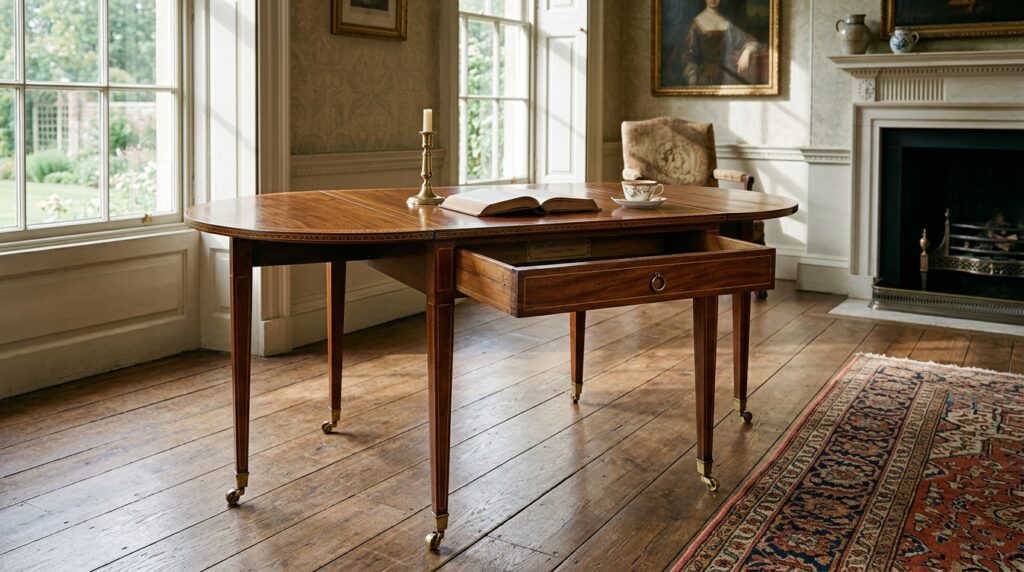
Antique Pembroke Tables: How to Identify & Value (Chippendale vs. Hepplewhite)
Identify authentic antique Pembroke tables. Master drop-leaf fly brackets, dummy drawer fronts, brass cup casters, Georgian Hepplewhite eras, and values.
Identification guides, maker marks, and authentication tips for antique tables.
Identify authentic antique Pembroke tables. Master drop-leaf fly brackets, dummy drawer fronts, brass cup casters, Georgian Hepplewhite eras, and values.
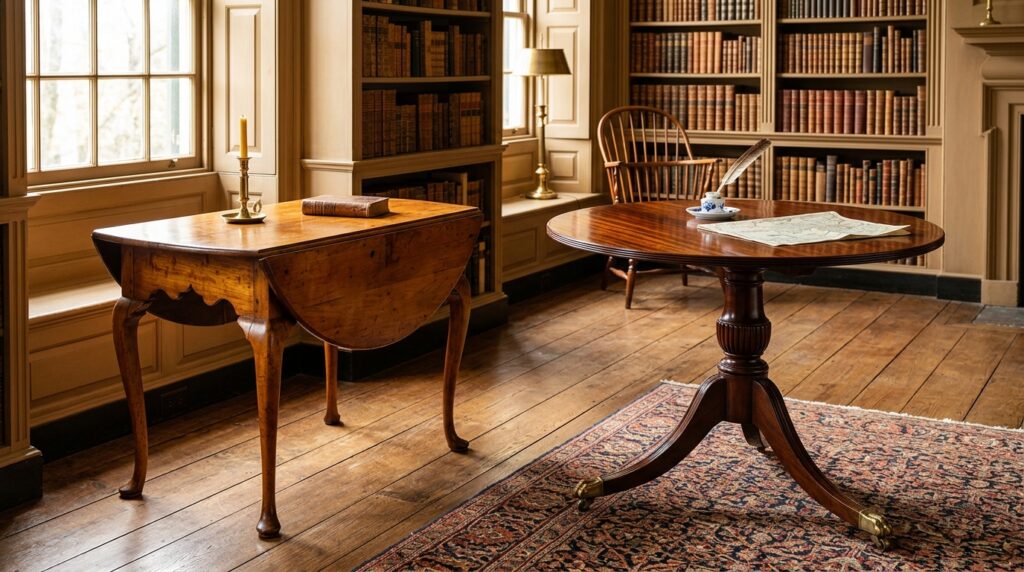
Learn how to tell cherry from mahogany in antique furniture. Master pitch pocket identification, ribbon stripe chatoyancy, pore structures, and aging differences.
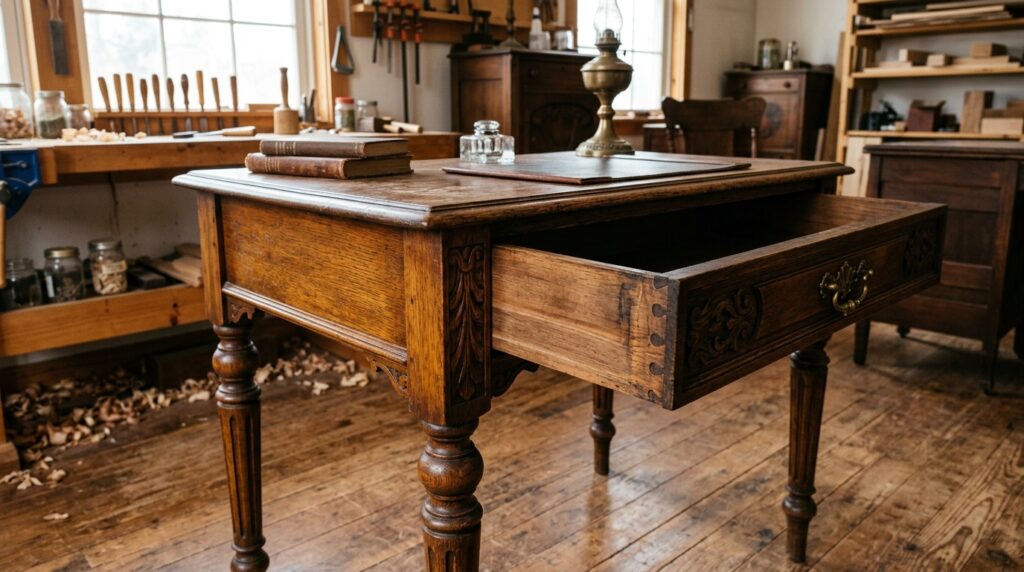
Identify authentic Knapp joints (pin-and-cove / pin-and-scallop) on antique drawers. Learn how Charles Knapp’s 1867 patent precisely dates furniture to 1870–1900.
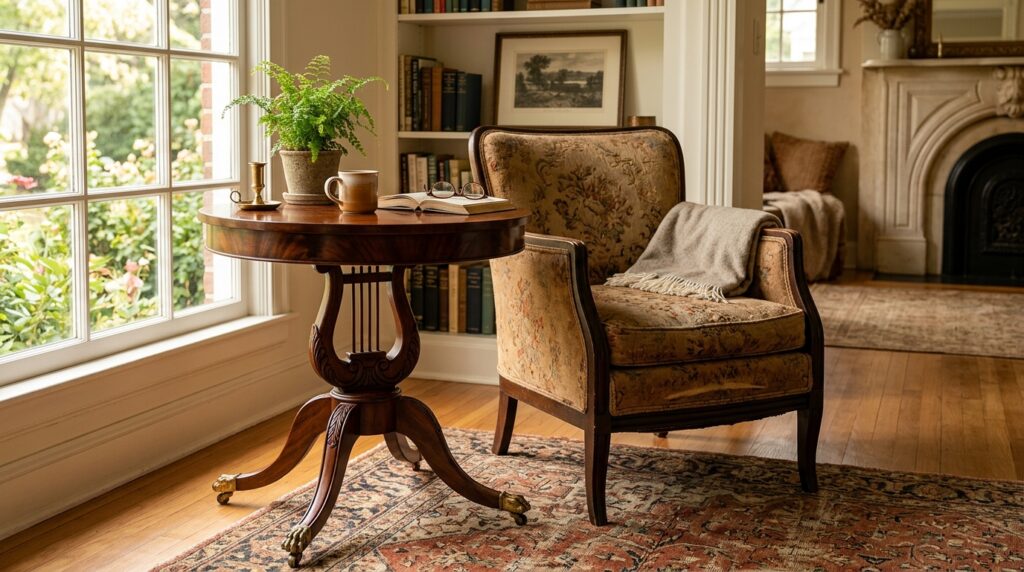
Decipher Mersman table markings, 4-digit stamped model numbers, and current market values. Identify lyre tables, step tables, and Celina Ohio factory eras.
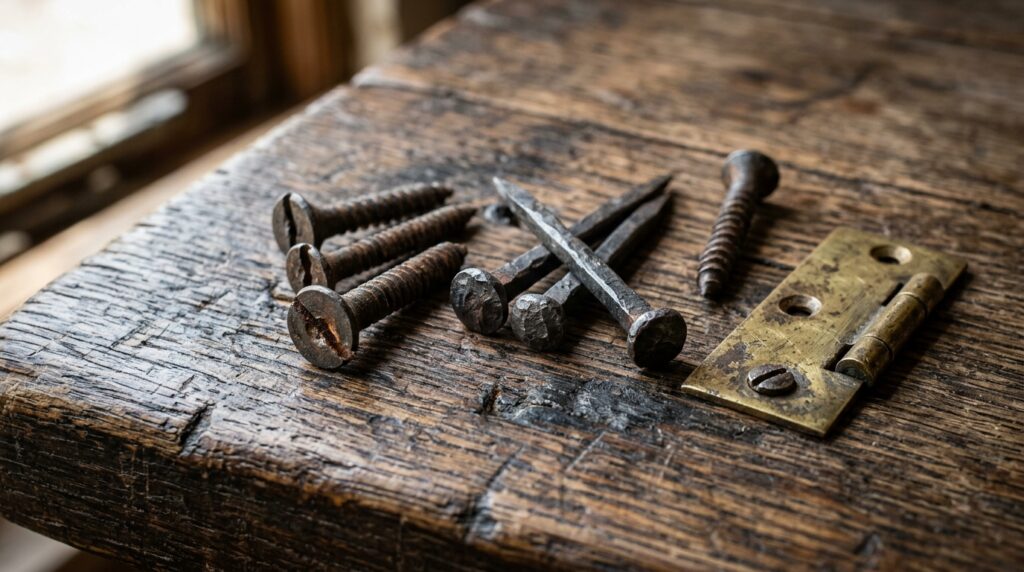
Master how to date antique furniture by screws, nails, and saw marks. Learn the 1846 Sloan cutoff, rose-head nails, sash saw kerfs, and reproduction clues.
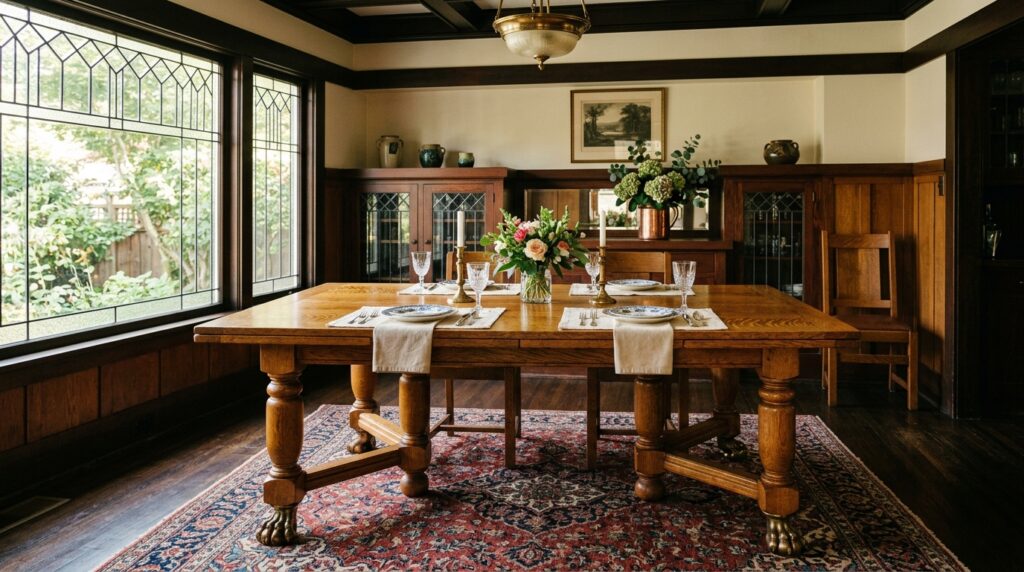
Learn how to tell if a table is authentic antique oak. Inspect medullary ray flecks (tiger oak), red vs white oak grain, hand joinery, and 1970s veneer signs.
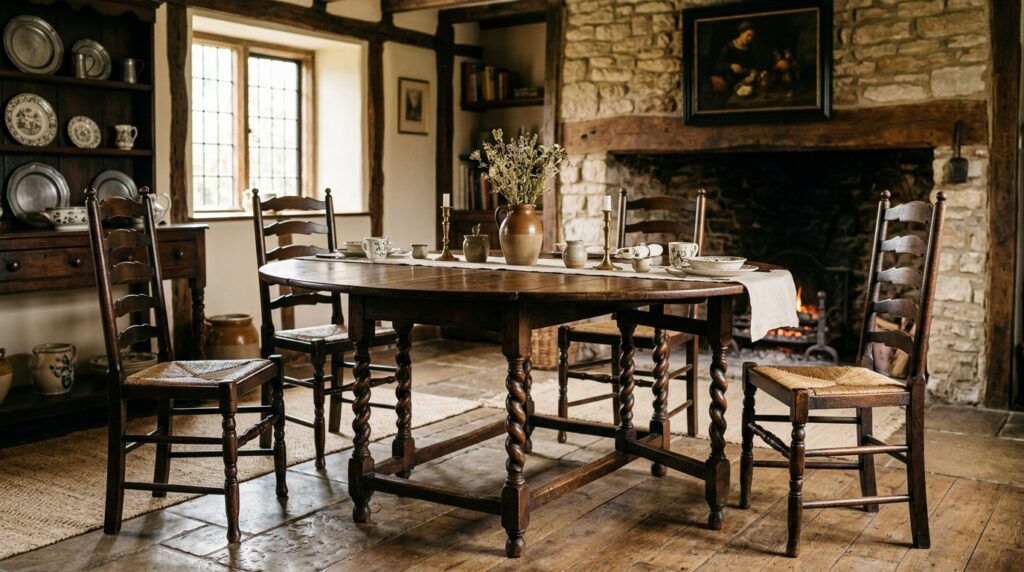
Identify authentic antique gateleg tables across Jacobean, Queen Anne, and Colonial eras. Learn how to date barley-twist legs, pivot joints, and spot reproductions.
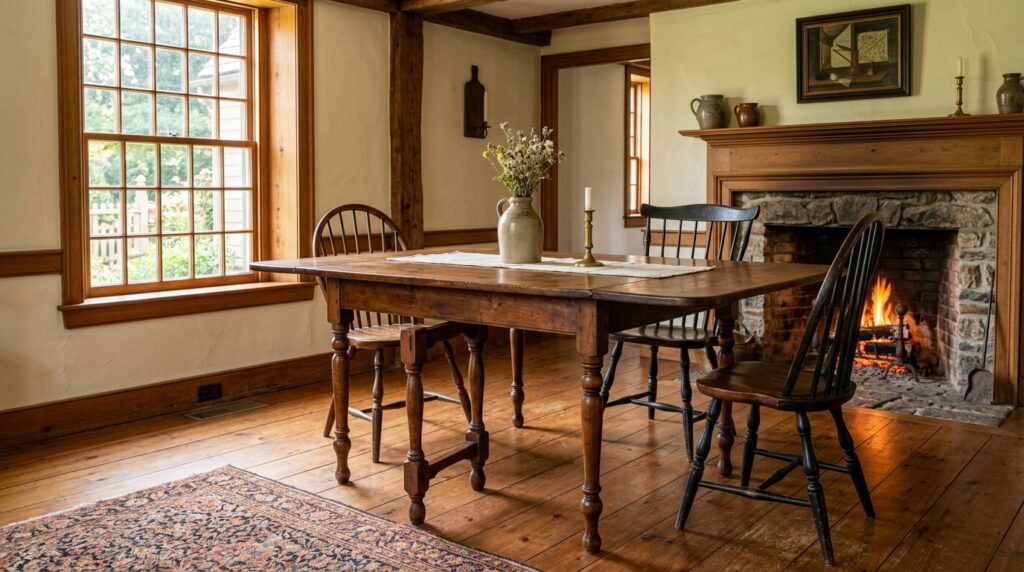
Wondering if your drop leaf table is an antique? Use our expert identification guide to date your table by its rule joints, saw marks, hinges, and historical makers marks.
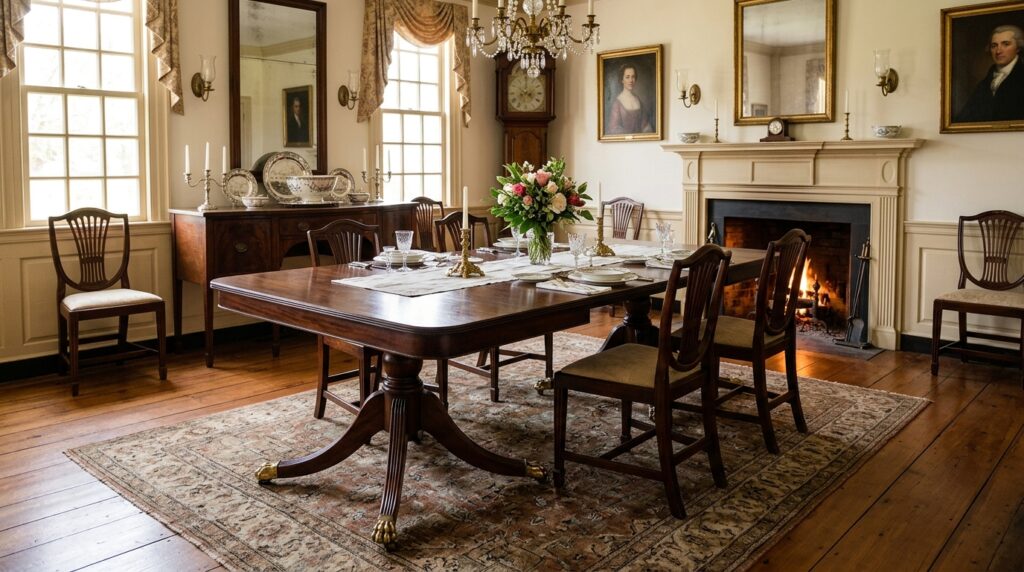
Inherited a Duncan Phyfe table? Learn how to tell a genuine 1800s Federal original from a 1940s Colonial Revival reproduction using saw marks, brass feet, and maker marks.