
Among the most charming, functional, and conversation-starting mobile tables of the 19th and 20th centuries, the antique tea cart (historically termed a tea wagon or hostess cart) holds a unique place in social and decorative arts history. Developed during the late Victorian era as an aristocratic tool for servantless dining and refined afternoon tea rituals, and later perfected by early 20th-century Grand Rapids manufacturers, a fine vintage tea wagon combines cabinetmaking joinery with precision mechanical wheelcraft. Today, as collectors repurpose these heirloom pieces into mobile cocktail bar carts, dessert stations, and coffee bars, demand for authenticated antique tea carts has surged.
However, because many vintage tea carts have lost their original removable glass trays, suffered cracked or dry-rotted rubber tires, or undergone unrecorded wheel replacements, accurately evaluating an antique tea cart requires understanding key structural diagnostics. In this definitive collector’s guide, we decode the history and mechanical anatomy of antique tea carts, trace the evolution of wheels and tire materials, evaluate famous makers, and provide an updated 2026 valuation guide.
⚡ Collector & Appraiser Fast Reference: Antique Tea Carts
- The Essential Value Driver: The single most critical value factor is the original removable glass-bottom serving tray. A tea cart retaining its matching wood-framed glass tray with brass handles commands 40% to 75% more than an identical cart missing its tray.
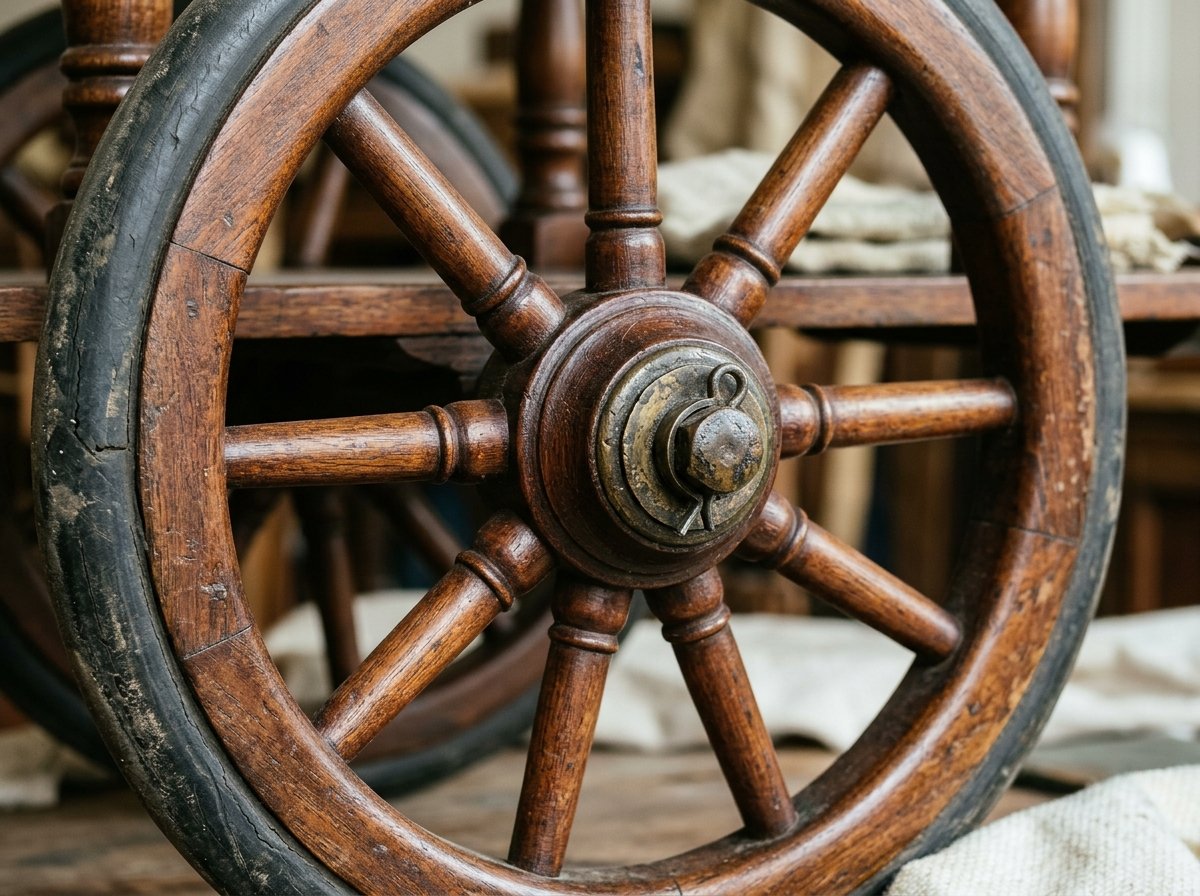
- Wheel Forensics: Early authentic tea wagons (c. 1900–1930s) feature two large wooden spoked front wheels (12 to 16 inches in diameter) fitted with channeled, solid vulcanized black rubber tires, balanced by two small 360-degree rear brass or porcelain swivel casters.
- Drop-Leaf Mechanics: Most quality American tea carts feature dual drop leaves supported by either pivoting wooden butterfly fly-arms (pre-1915) or spring-loaded brass/steel quadrant brackets (1920s–1940s). The joint between leaf and tabletop should display a classic, flush-fitting drop-leaf rule joint.
- Prominent Makers: Grand Rapids powerhouse Imperial Furniture Company was the world leader in mahogany tea wagons, marked with their iconic green-and-gold shield decal. Other high-value makers include Brandt Cabinet Works, Paoli, and Cushman Colonial.
- 2026 Market Valuations: Common mid-century colonial revival carts sell for $100 to $225; complete 1910s–1930s mahogany tea wagons with trays trade between $250 and $650; and pristine Victorian carved walnut or quartersawn tiger oak wagons reach $450 to $1,200+.
The Origin of the Tea Wagon: Servantless Elegance
The wheeled tea cart emerged in Great Britain during the high Victorian era (c. 1870s) out of a delicate social necessity: privacy. In aristocratic households, servants were present in the parlor or drawing room during afternoon tea to carry trays, boil water, and distribute sandwiches. However, intimate social gossip, courtship discussions, and political chatter were stifled by the presence of household staff.
To solve this, Victorian inventors and cabinetmakers developed the mobile tea trolley or étagère on wheels. The kitchen staff prepared all teaware, silver hot water pots, and pastries in the butler’s pantry, rolled the cart into the drawing room, and withdrew. The hostess herself then presided over the cart, wheeling it between guests to pour tea without third parties overhearing conversation.
By the turn of the 20th century, American households embraced the concept enthusiastically. In the 1910s and 1920s, as domestic servant numbers declined sharply in suburban homes, the American “tea wagon” became an indispensable status symbol for the modern housewife. American factories in Grand Rapids, Michigan, and Jamestown, New York, transformed the heavy Victorian étagère into a sleek, drop-leaf occasional table equipped with bicycle-inspired wooden wheels, silverware storage, and heat-resistant glass inserts.
The 5 Anatomical Hallmarks of an Antique Tea Cart
When appraising or identifying an antique tea cart, examine these five structural components:
1. Wheel Engineering & Tire Materials
The running gear of a tea cart provides the most definitive evidence of its age and authenticity. Unlike modern bar carts with four identical small industrial casters, authentic vintage tea wagons utilize a tricycle or 4-wheel asymmetrical carriage:
- Two Large Front Drive Wheels: Typically measuring between 12 and 16 inches in diameter. On pre-1940 pieces, these wheels consist of turned wooden hubs, 8 to 12 hand-fitted wooden spokes, and a grooved wooden felloe (rim).
- Vulcanized Rubber Tires: The wooden wheel perimeter features a recessed groove fitted with a continuous ring of solid vulcanized black or dark grey rubber. Because natural rubber oxidizes and loses plasticizers over 80 to 100 years, original tires will almost always display fine surface checking, minor hardening, or flat spots. Pristine, pliable synthetic rubber without any aged seam indicates modern replacement tires.
- Rear Swivel Casters: The back of the cart rests on two small 2- to 3-inch casters that pivot 360 degrees, allowing the user to steer the wagon using the push handle. Authentic period casters feature cast brass or steel pintles fitted with small wooden, cast-iron, or porcelain roller wheels.
2. Drop-Leaf Mechanics & Rule Joints
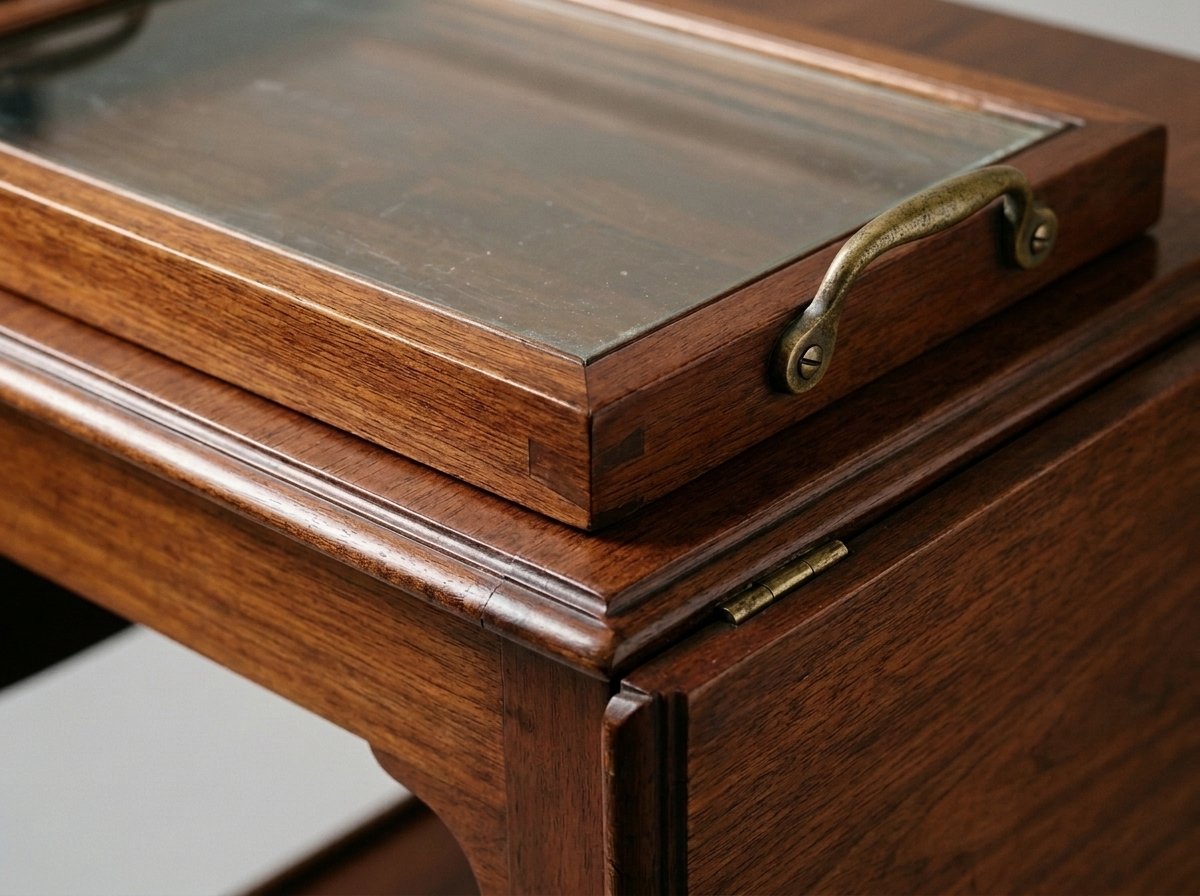
Nearly all high-grade American tea wagons feature side drop leaves that fold downward during transit and lift upward to create an expanded serving or dining surface. Inspect the hinge seam between the tabletop and the leaf: an authentic antique cart features a rounded convex molding on the table bed fitting into a matching concave hollow on the leaf—the classical cabinetmaker’s rule joint.
Beneath the leaves, support brackets reveal era-specific engineering:
- Pivoting Wooden Fly Arms (c. 1890–1915): Sawn hardwood arms attached to the underside undercarriage that pivot outward on wooden dowels to support the leaves.
- Spring-Loaded Metal Elbow Brackets (c. 1915–1940s): Stamped brass or blued-steel hinged brackets that click into locked positions when the leaf is raised, released by pressing a center lever.
3. The Removable Glass-Bottom Serving Tray
The crowning glory of a collector-grade tea wagon is its removable top serving tray. Because scalding teapots, hot water kettles, and accidental lemon spills would ruin delicate hand-rubbed shellac or lacquer wood surfaces, makers provided a fitted, lift-off wooden tray with a glass bottom.
The tray fits snugly into recessed perimeter moldings on top of the cart. It features two cast brass or turned wood side handles, allowing the hostess to lift the entire tea service off the wagon in one fluid motion to present it at a bedside, side table, or guest’s lap. The glass inside original trays is thick, heavy, antique rolled or beveled glass, frequently backing an inlaid medallion, needlepoint embroidery, or crotch mahogany veneer.
4. Turned Push Handles & Silverware Storage
At the rear of the cart, look for the steering push handle. On period examples, this handle is turned from solid mahogany, walnut, or oak, supported by two curved cast-brass brackets or continuous curved wooden side stiles. Directly beneath the handle or beneath the main tabletop, fine tea wagons feature a shallow cutlery drawer designed to hold sterling silver teaspoons, sugar tongs, and linen tea napkins. In pre-1930 pieces, this drawer will display crisp hand-cut or fine machine-cut dovetails (compare our forensic guide to dating antique furniture by dovetails).
5. Lower Tier Shelves & Retractable Galleries
Connecting the four legs near the wheel axle level is a broad, flat lower shelf. This secondary tier provided essential storage for dirty used teacups, tiered pastry plates, and backup hot water carafes. In rare luxury models (such as those produced by Imperial Furniture Company), this bottom shelf contains a retractable or fold-out wire bottle carrier or cup gallery.
Chronological Timeline: How to Date Your Antique Tea Cart
Use this historical design timeline to pinpoint the manufacturing date of your tea cart:
| Design Era & Date | Primary Styling & Profile | Wheel & Tire Specifications | Dominant Woods & Features |
|---|---|---|---|
| Late Victorian (c. 1875–1900) | Heavy, architectural étagère styling; turned spindle galleried shelves; incised carvings | Small cast brass or white porcelain casters; occasionally 4 small equal-sized iron wheels | Black walnut, rosewood, burled veneers; pierced brass hardware; ornate push rails |
| Arts & Crafts / Mission (c. 1900–1918) | Rectilinear, mortise-and-tenon construction; heavy square legs; broad flat drop leaves | Large wooden spoked wheels; dark vulcanized rubber; exposed axle pins | Quartersawn white oak (tiger oak); fumed matte finish; hammered copper handles |
| Golden Age Grand Rapids (c. 1915–1939) | Duncan Phyfe and Chippendale revivals; delicate tapered reeded legs; shaped drop leaves | Large 12–16″ spoked wooden wheels with brass hubcaps; 360-degree rear casters | Honduran mahogany, American walnut; removable glass-bottom tray; felted silver drawer |
| Colonial Revival & Post-War (1940s–1950s) | Simplified drop-leaf wagons; turnings with less undercut depth; stenciled decals | Solid wood disc wheels or smaller wooden spoked wheels; black rubber tires | Maple, birch, cherry, stained gumwood; stamped metal drop-leaf brackets; wire nails |
| Mid-Century Bar Cart Era (1950s–1970s) | Streamlined circular or rectangular trolleys; dual glass or laminate shelves | Equal-sized small industrial metal casters; brass or chrome ball casters | Polished brass tubing, chrome, smoked glass, teak, bamboo/rattan; integrated bottle rings |
Famous Antique Tea Cart Manufacturers & Marks
While thousands of tea wagons were sold through unbranded department stores, finding an original maker’s tag or stencil substantially increases collector interest and market liquidity:
- Imperial Furniture Company (Grand Rapids, MI): Widely considered the finest manufacturer of vintage mahogany tea wagons in America. Their pieces feature hand-carved handle supports, book-matched crotch mahogany veneers, and their iconic green-and-gold shield decal inside the drawer or under the bottom shelf. Cross-reference our comprehensive guide to Imperial Furniture Company marks and history.
- Brandt Cabinet Works (Hagerstown, MD): Famous for mid-century and pre-war occasional tables, Brandt produced high-grade Duncan Phyfe revival tea wagons featuring brass paw accents, stenciled model numbers, and black-and-gold foil decals. Learn how to verify authentic Brandt factory markings in our Brandt Cabinet Works marks guide.
- Paoli Chair Company & Cushman Colonial: Renowned for solid maple and birch country colonial revival tea carts with turned baluster legs and heavy wooden disc wheels. Marked with branded wood stamps or paper inspection labels.
- Baker Furniture: Rare and highly prized, Baker occasionally produced ultra-luxury Georgian and Neoclassical tea wagons with satinwood stringing and cast-brass hardware, marked with their signature brass plaque (see our Baker Furniture markings guide).
Construction Forensics: Original vs. Altered or Married Carts
Before purchasing or valuing an antique tea cart, conduct this 4-step forensic inspection to detect alterations and married components:
1. The “Tray Fit” & Wood Aging Test
Because removable trays were easily separated during estate cleanouts or broken by drops, unscrupulous sellers sometimes build modern replacement trays. Place the tray into the cart’s top recess: the wood species, finish hue, and natural surface wear of the tray must match the table exactly. Invert the tray: the unfinished underside wood should show the same natural oxidization, screw styles, and subtle micro-craquelure as the tabletop below it. If the tray is loose, misaligned, or finished in shiny modern polyurethane, it is a replacement.
2. Axle Hardware and Wheel Play
Inspect the axle securing the two large front wheels. Period tea wagons use a continuous solid steel or iron axle rod running beneath the lower shelf, capped at both ends by threaded brass dome nuts or cast brass cotter pins. In contrast, modern alterations or married wheel sets often feature threaded metric rod stock, shiny zinc-plated hardware, or Phillips-head screws (see our guide on dating antique furniture by screws and hardware).
3. Rubber Tire Integrity: Original vs. Replacement
Original pre-war rubber tires are naturally dry, darkened, and rigid. While intact original tires are desirable, dried-out rubber that has cracked or fallen off the wheel rim is extremely common. Replacing perished rubber with high-grade reproduction solid rubber cord does not hurt the value of an antique tea wagon, provided the wooden wheel itself has not been drilled, modified, or replaced.
4. Drop-Leaf Hinge Screws & Sagging
Crawl beneath the drop leaves with a flashlight. Authentic drop-leaf tea carts feature cast brass back-flap hinges countersunk flush into the underside wood, secured with single-slotted steel or brass wood screws. Inspect the leaves when fully raised: if the leaves sag downward or wobble under slight pressure, the hinge mortises may have stripped, or the supporting bracket stops have worn down over decades of use.
2026 Valuation Matrix: What Is Your Antique Tea Cart Worth?
Current market values for antique tea carts reflect condition, completeness (especially the removable tray), wood quality, and maker attribution:
| Tea Cart Classification & Period | Key Identification Features | Fair Market Value (2026) | Condition & Completeness Impact |
|---|---|---|---|
| Grand Rapids Mahogany Tea Wagon (c. 1910–1935) | Imperial or Brandt shield mark; flame mahogany; spoked wheels; brass handle | $275 – $650 | Must have original glass-bottom tray and intact wheels; missing tray drops value to $150–$200 |
| Victorian Carved Walnut Tea Trolley (c. 1875–1895) | Carved walnut/rosewood; spindle galleries; porcelain casters; multi-tier étagère | $450 – $1,200 | Intact original marble or wood tiers, absence of broken spindle gallery posts, unstripped finish |
| Arts & Crafts Quartersawn Tiger Oak Wagon (c. 1905–1920) | Mission style; heavy square posts; quartersawn tiger oak medullary rays | $350 – $850 | Vivid ray flecks, intact original fumed finish, tight mortise-and-tenon joints |
| Late Colonial Revival Drop-Leaf Cart (1940s–1950s) | Turned maple or cherry legs; solid wood disc wheels; stamped metal brackets | $125 – $250 | Good cosmetic condition, smooth rolling wheels; perfect for casual home bar staging |
| Mid-Century Modern Brass & Smoked Glass Cart (1950s–1970s) | Tubular brass frame; two-tier plate glass shelves; large caster wheels | $300 – $950+ | Unchipped glass shelves, bright unpitted brass plating, designer maker attribution |
| Incomplete / Project Antique Tea Cart (Missing Tray/Damaged Wheels) | Missing removable tray; cracked or absent rubber tires; surface finish scratches | $60 – $140 | Sold primarily as restoration candidates or upcycling projects for decorative planters |
Preservation, Wheel Repair & Maintenance
Because antique tea wagons are mobile mechanical pieces, they require specialized maintenance to keep their wooden joinery and running gear in peak condition:
- Lubricate Axles with Graphite, Not WD-40: Never spray petroleum-based aerosol lubricants (like WD-40) into antique wooden wheel hubs or caster swivels. Petroleum breaks down vintage wood fibers and dissolves old rubber tires. Instead, use dry powdered graphite lubricant or light sewing machine mineral oil applied sparingly with a precision needle.
- Replace Brittle Rubber Tires Correctly: If your wagon’s original rubber tires have rotted or cracked off, do not wrap the rim in modern electrical tape or hose. Purchase reproduction solid black rubber tire stock (available in 3/8″ and 1/2″ round profiles from antique restoration suppliers). Soak the rubber in hot water for 5 minutes to soften it, stretch it evenly into the wheel groove, and join the ends with cyanoacrylate (super glue).
- Nourish the Wood with Microcrystalline Wax: Avoid modern silicone sprays that cloud original lacquer. Protect both the cart’s drop leaves and the removable tray frame with pure microcrystalline wax (such as Renaissance Wax), buffing gently with a microfiber cloth to maintain a water-repellent, fingerprint-resistant luster.
Frequently Asked Questions
What is the difference between a tea cart and a bar cart?
An antique tea cart (or tea wagon) was designed specifically for afternoon tea service, typically featuring two large wooden spoked front wheels, drop leaves that expand the serving area, a push handle, and a removable glass-bottom tray to protect against hot teapots. A bar cart (popularized in the 1950s) was engineered specifically for alcoholic beverage service, generally featuring four equal-sized casters, open glass or mirrored shelves, and integrated brass bottle-holding guard rails without drop leaves.
How much is an antique tea cart worth if the glass tray is missing?
Missing the original removable glass serving tray significantly devalues an antique tea cart, reducing its market value by 40% to 60%. For example, an authentic 1920s Imperial mahogany tea wagon worth $400 with its matching tray will typically sell for only $150 to $200 without the tray. Collectors consider the tray an integral architectural element of the piece.
Can you replace the rubber tires on an antique tea wagon?
Yes. Specialized antique restoration suppliers sell extruded solid rubber tire cord designed specifically for antique tea carts and doll buggies. The replacement rubber is heated in hot water to increase flexibility, stretched into the wooden wheel groove, cut to exact length with a razor, and bonded at the seam. Replacing deteriorated rubber does not diminish the cart’s value and restores smooth, floor-safe rolling functionality.
What wood is an antique tea cart usually made from?
The vast majority of early 20th-century American tea wagons were crafted from genuine Honduran mahogany or American black walnut, often featuring book-matched crotch mahogany veneers on the tabletop and tray. Arts and Crafts examples from 1900–1915 were constructed from quartersawn white oak (tiger oak), while late Colonial Revival models from the 1940s and 1950s utilized maple, cherry, or gumwood.
How can I identify who made my antique tea cart?
Look for maker identification in three primary locations: inside the shallow silverware drawer (look for paper labels, brass tags, or burned stamps), on the underside of the lower bottom shelf, or beneath the tabletop drop leaves. Prominent makers like Imperial Furniture Company stamped a green-and-gold shield decal, while Brandt Cabinet Works used foil labels or stenciled model numbers.