The Ultimate Guide to Antique Table Styles
Antique tables are more than just furniture. They are pieces of history that you can touch and use. A good antique table adds character to a room. It also holds its value over time.
But how do you tell a Queen Anne table from a Victorian one?
And what makes a table a true “antique”?
Generally, an item must be at least 100 years old to be an antique. Anything newer is usually called “vintage.”
In this guide, we will look at the most famous antique table styles. We will help you identify them by their legs, wood, and shape.
Whether you are a buyer or just curious, this roadmap will help you spot a masterpiece.
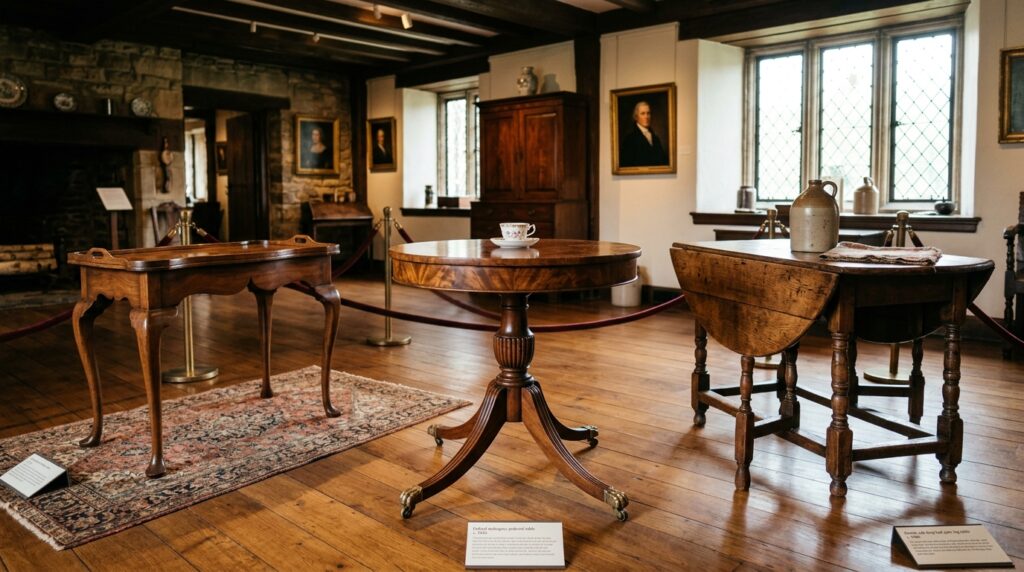
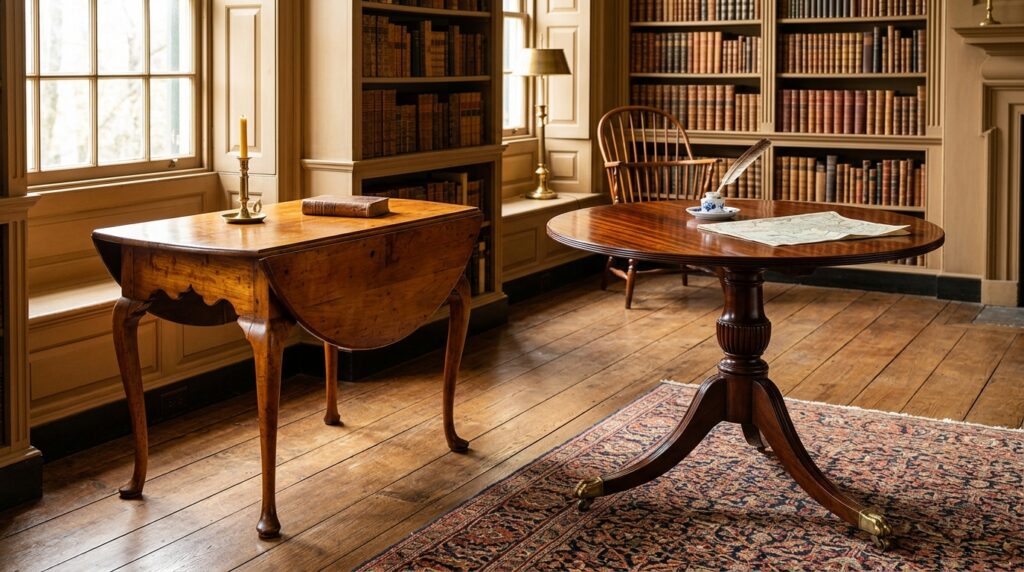
Antique Table Styles Comparison
1. Early Eras: Strength and Simplicity (1600s – 1750s)
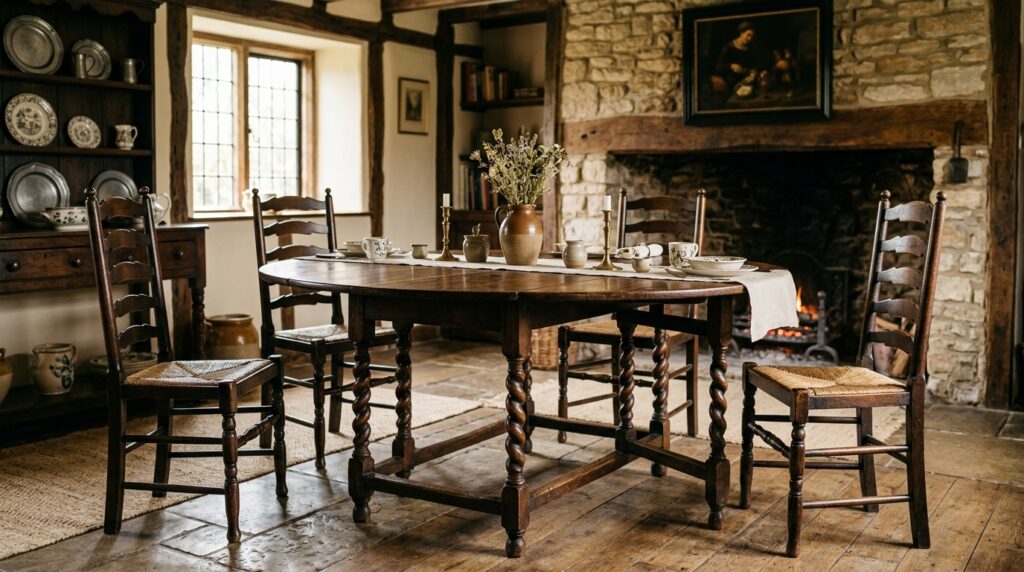
During the 1600s and early 1700s, tables were sturdy and heavy. Builders used local woods such as Oak and Walnut. These pieces were made to last for generations.
William and Mary (1690 – 1720)
This style is named after the King and Queen of England. These tables look thin and elegant compared to earlier styles.
The Legs: Look for “Trumpet” legs. They look like the bell of a trumpet pointing upward.
The Feet: Most have “Ball” feet or “Bun” feet. They look like small, round wooden balls.
Key Table: The Gateleg table. It has folding flaps and extra legs that swing out like a gate.
Queen Anne (1720 – 1750)
Queen Anne furniture is famous for being graceful. This era moved away from heavy carvings. Instead, builders focused on beautiful curves.
The Cabriole Leg: This is the easiest way to spot this style. The leg curves out at the “knee” and narrows down at the “ankle.” It looks like an “S” curve.
The Feet: Most Queen Anne tables end in a Pad foot. It is a simple, flat, oval-shaped foot.
The Wood: Walnut was the top choice. It gave the tables a warm, rich glow.
Key Table: The Tea table. These were small, portable, and often had a raised edge to keep tea sets from sliding off.
2. The Golden Age of Cabinetry (1750s – 1830s)
During this time, furniture making became a true art form. Builders stopped using heavy oak and started using Mahogany.
This wood was strong and easy to carve into fine details.
Chippendale (1750 – 1780)
Thomas Chippendale was a famous English designer. His style is very fancy and solid.
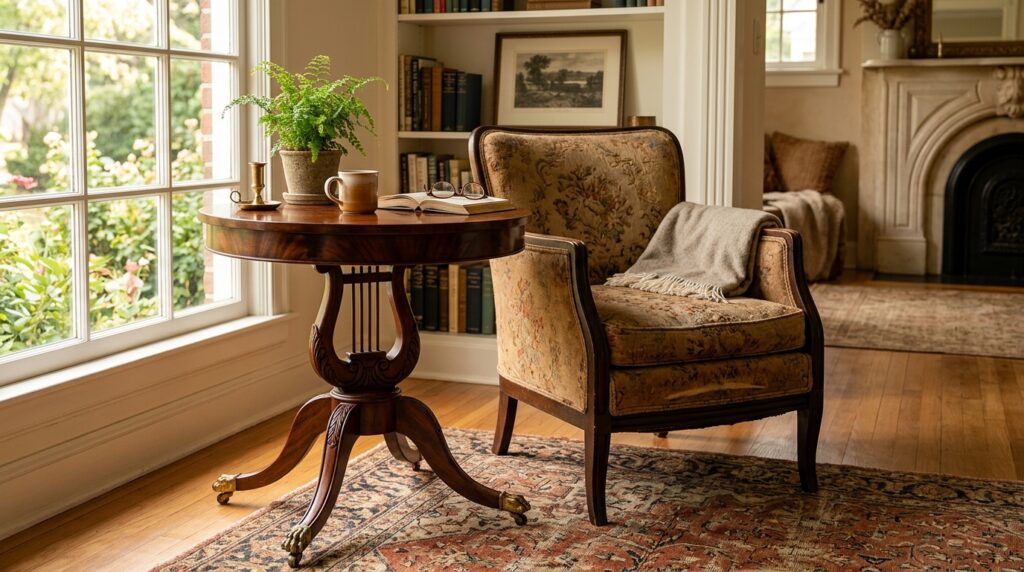
The Legs: Look for the Ball and Claw foot. It looks like a bird’s talon gripping a ball.
The Carvings: These tables often have shells or leaves carved into the wood.
The Look: They are wide, sturdy, and look very expensive.
Federal & Hepplewhite (1780 – 1810)
After the heavy Chippendale style, furniture became lighter and thinner.
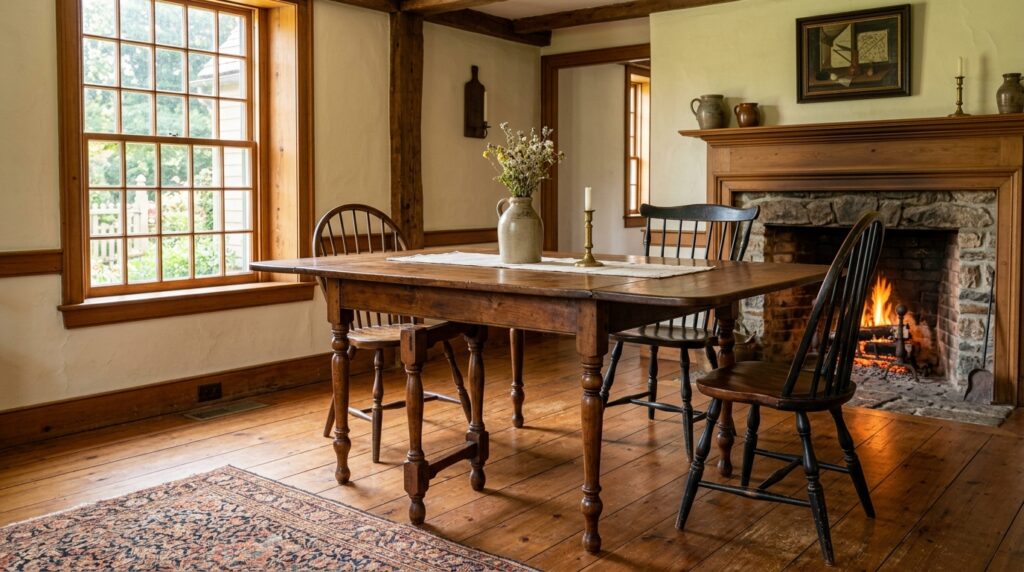
The Legs: Instead of curves, these legs are straight and tapered. They get thinner as they reach the floor.
The Feet: Many end in a Spade foot, which looks like a small square or rectangle.
The Decoration: Builders used “inlays.” This is when they set different colored wood into the surface to make patterns.
Empire & Regency (1810 – 1830)
This style was inspired by ancient Greece and Rome. These tables look powerful and grand.
The Base: Instead of four legs, many have a thick center pedestal.
The Feet: Look for lion’s paws made of wood or brass.
The Themes: You will see columns and heavy scrolls.
3. The Victorian Explosion (1837 – 1901)
The Victorian era lasted a long time, so there are many different looks. Because of new machines, factories could make furniture faster and cheaper.
The Gothic and Rococo Revival
Victorians loved the past. They brought back old styles but made them much more ornate.
The Materials: Rosewood and dark Walnut were popular. Many tables have heavy marble tops.
The Shapes: These tables have lots of “C” and “S” curves. They look very “busy” with flower and fruit carvings.
Eastlake (1870 – 1890)
Charles Eastlake hated the over-decorated Victorian look. He wanted furniture to be “honest” and simple.
The Lines: These tables are very rectangular and upright.
The Carvings: Instead of deep, 3D carvings, Eastlake tables have shallow, incised lines.
The Wood: They used Cherry, Oak, and Walnut.
How to Tell Antique Tables Apart
If the table is very heavy, dark, and has a marble top, it is likely Victorian. If it is thin, elegant, and has straight legs with wood patterns, it is likely Federal.
4. The Transition to Modernism (1900s – 1950s)
As the 20th century began, designers moved away from the heavy, dark styles of the Victorians. They wanted furniture that felt fresh, functional, and clean.
Arts and Crafts (Mission Style)
This style was a protest against factory-made furniture. It focused on hand-made quality.
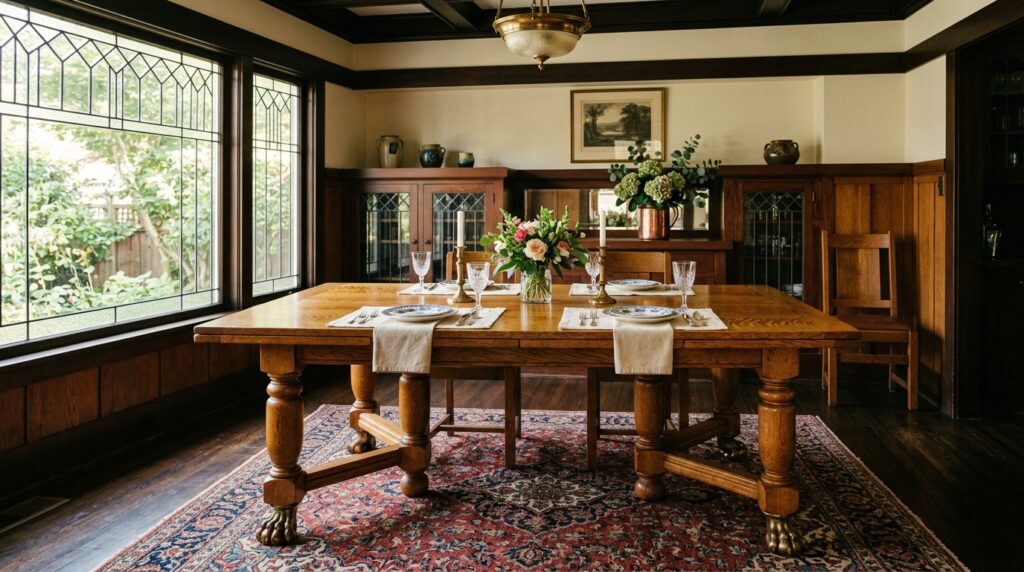
The Look: These tables are very blocky and strong. They use straight lines and vertical slats.
The Wood: Almost always made of Oak.
The Details: You can often see the “joints” where the wood pieces connect. This shows the builder’s skill.
Art Deco
Art Deco was about glamour and the future. It became popular in the 1920s and 30s.
The Shapes: You will see triangles, circles, and jagged “zigzag” edges.
The Finish: These tables are often very shiny. They use high-gloss lacquer and exotic wood veneers like Burl Walnut.
The Legs: Many have “stepped” bases that look like tiny skyscrapers.
Mid-Century Modern (MCM)
This style is still very popular today. It focuses on being simple and useful.
The Legs: Look for “Cigarette” or tapered legs. They are thin and often slant outward.
The Materials: Builders used Teak and Walnut. They also started using molded plastic and metal.
The Feel: The tables look “light” and take up very little visual space.
Anatomical Checklist: Identify a Style Fast
If you are at an estate sale or an antique shop, use this checklist to narrow down the style.
Step 1: Check the Legs
The legs are the best clue to the table’s age.
- Trumpet or Gateleg: Early English / William and Mary.
- Cabriole (S-Curve): Queen Anne or Rococo Victorian.
- Straight and Tapered: Federal or Mid-Century Modern.
- Heavy Pedestal: Empire or Regency.
Step 2: Look at the Feet
The “foot” of the table tells you about the craftsmanship.
- Ball and Claw: High-style Chippendale.
- Pad Foot: Simple Queen Anne.
- Spade Foot: Federal or Hepplewhite.
- Bun Foot: Early 1700s styles.
Step 3: Inspect the Wood
- Oak: Very old (1600s) or Arts and Crafts (1900s).
- Mahogany: The Golden Age (1750–1830).
- Walnut: Queen Anne or Mid-Century Modern.
- Rosewood: High-end Victorian.
Step 4: The Hardware and Joinery
Look under the table.
- Hand-Sawn Marks: If you see uneven lines in the wood underneath, the table is likely very old.
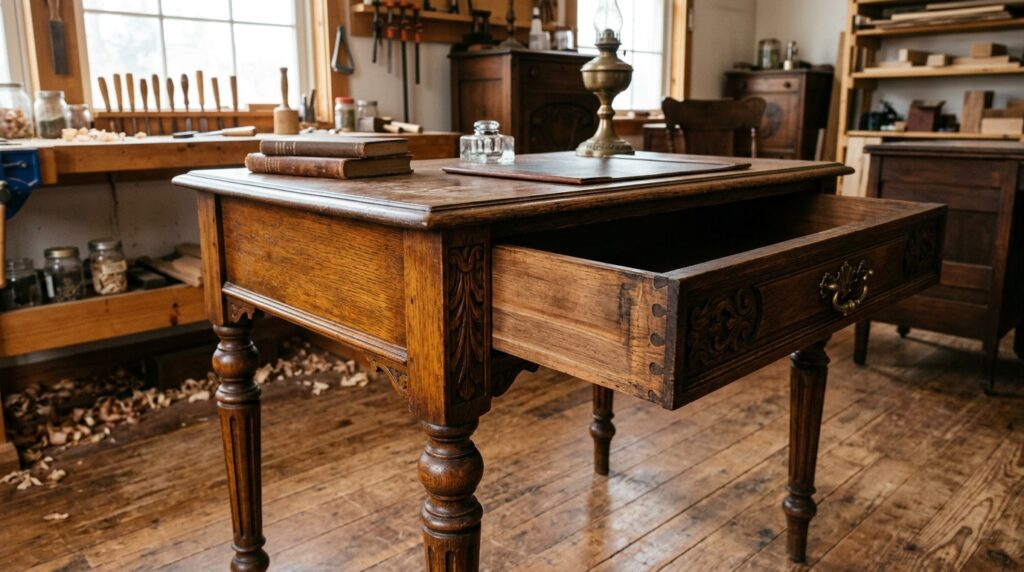
- Dovetail Joints: Check the drawers. Wide, handmade “teeth” mean an older piece. Perfectly even, small teeth mean it was made by a machine later on.
Essential Questions for Every Collector (FAQs)
How can I tell if my antique table is real or a reproduction?
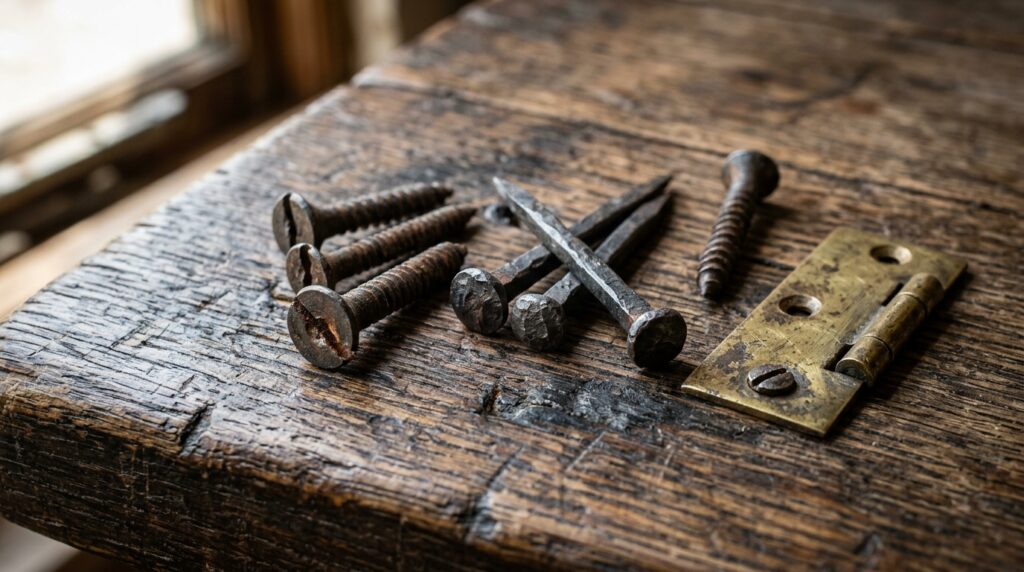
Check the underside of the table. Look for “nicks” or uneven surfaces. Real antiques were often planed by hand, leaving small imperfections. Also, look at the screws. Modern screws have perfectly even threads, while 18th-century screws have irregular, hand-cut threads.
Is it okay to refinish an antique table?
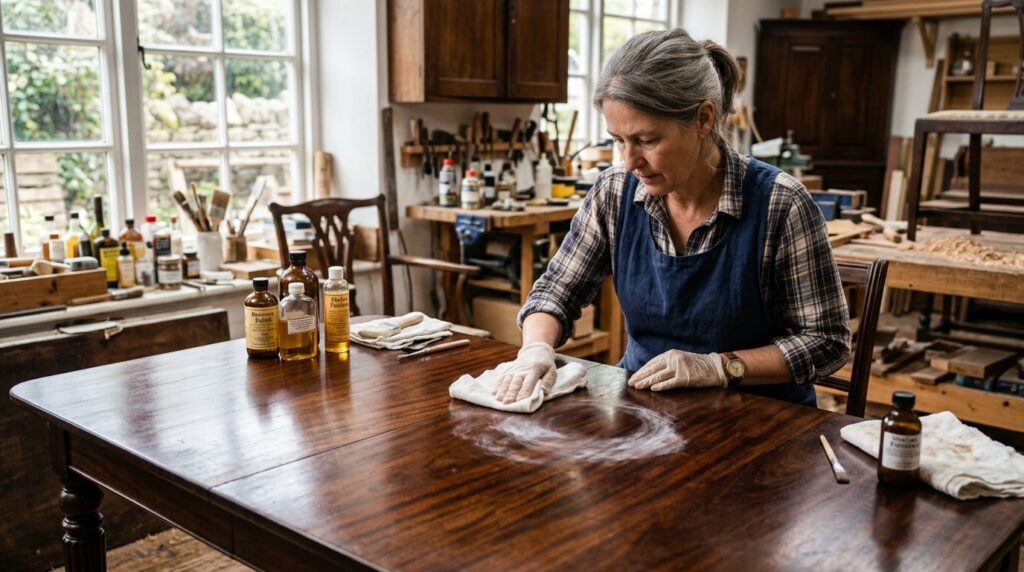
Usually, no. For very rare pieces, original “patina” (the wear and glow of age) is worth a lot of money. If you strip the original finish, you might lose 50% of the table’s value. Always consult an expert before sanding or painting an old piece.
What is a “married” piece in antique furniture?
A “married” table is a piece where the top and the base did not start life together. For example, someone might put a Victorian marble top on a Federal wood base. While it might look nice, it is not a “pure” antique and is worth much less to collectors.
How do I identify the wood of my antique table?
Mahogany: Deep reddish-brown with a very tight, straight grain.
Oak: Light to medium brown with very visible, large grain patterns (often looks “tiger-striped”).
Walnut: Rich chocolate brown, often with wavy or curly patterns.
What does the “100-year rule” mean for antique tables?
In the United States, the Customs Service defines an “antique” as an item that is at least 100 years old. If a table was made in 1940, it is technically “vintage,” not antique.
Conclusion
Choosing an antique table is about more than just style. It is about bringing a story into your home.
Whether you love the elegant curves of a Queen Anne tea table or the bold, simple lines of an Arts and Crafts oak desk, there is a style for everyone.
Understanding these styles helps you shop with confidence. You now know what to look for in the legs, the feet, and the wood.
The next time you see a beautiful old table, you won’t just see furniture—you will see a piece of history.
Ready to start your collection?
Browse our latest guides on specific eras or leave a comment below if you need help identifying a family heirloom!